
Latest Articles

Look Up All Sorts of Information with a Quick Click or Tap on the Mac

Apple makes it easy to look up information about any word you can see on your Mac, in nearly any app. To access this information, Control- or right-click the word and choose Look Up "*word*", use the trackpad to tap the word with three fingers, or hover the pointer over it and press Command-Control-D. macOS displays a popover with a dictionary definition. And in 10.12 Sierra and later, you can also swipe right with two fingers on the trackpad (or click the buttons at the bottom) to see much more...


Make More Space for Documents by Putting Your Dock on the Side of Your Mac’s Screen

By default, Apple locates the Dock at the bottom of the Mac's screen. If that location interferes with you seeing as much of your document windows as you'd like, you can set it to appear only when you move the pointer to the bottom edge of the screen. But there's a better way: put the Dock on the side of the screen where there's plenty of horizontal room and it won't get in the way of most document windows. Open System Preferences > Dock, and select Right or Left from...

Teach Siri How to Pronounce Names Properly

Siri is supposed to be a competent voice assistant, but sometimes Siri can't even pronounce your own name correctly! Luckily, it's easy to fix Siri's pronunciation for any name. Just say to Siri, "Learn how to pronounce Jill Kresock." (Siri defaults to "krehsock" rather than the correct "kreesock" in this case.) Siri first asks you to say the person's first name and then presents a list of options for the best pronunciation. Tap the play button next to each option to hear it, and tap Select for the one you...

The Secret Keyboard Shortcut for Comparing Before After Edits in Photos on the Mac

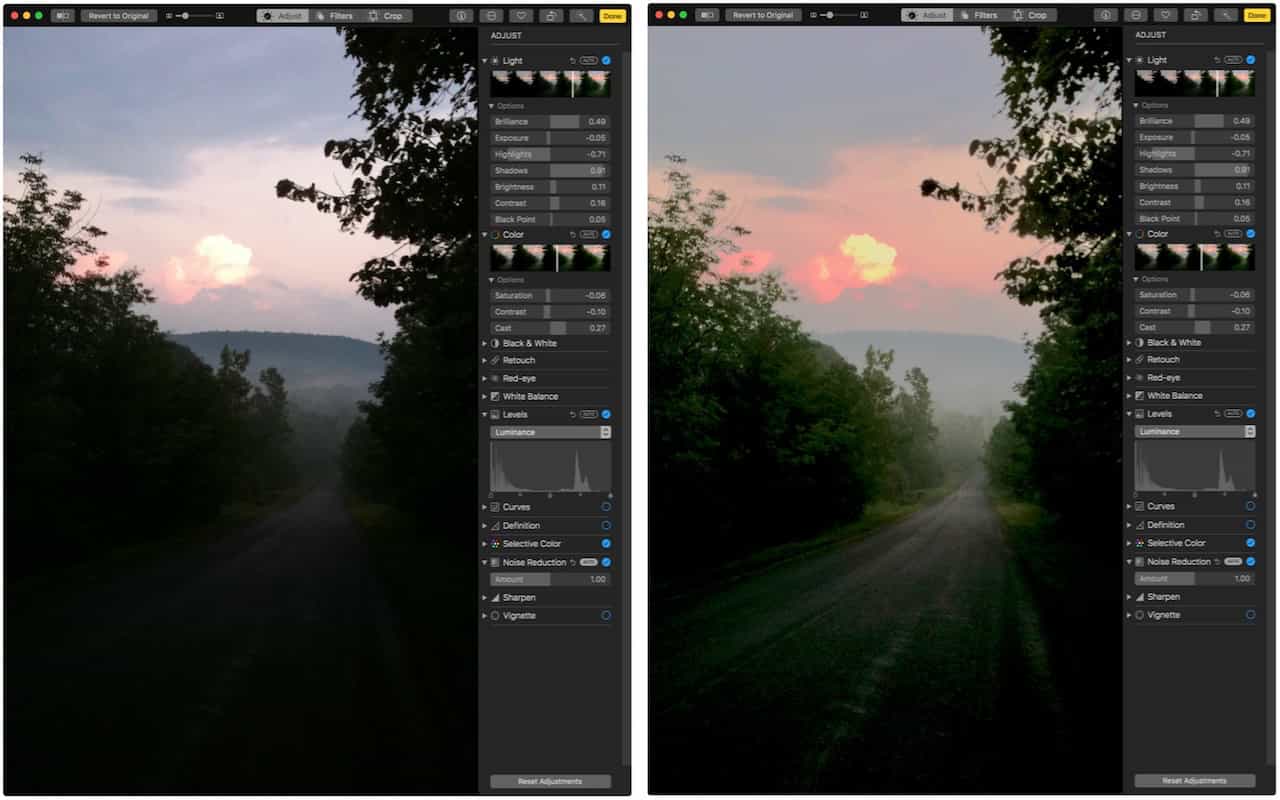
Photos on the Mac provides so many editing tools that it's easy to lose track of how an edited image compares to the original. You can always use the Revert to Original command and then undo it, but that's fussy. Instead, Photos provides a Show Original button in the upper-left corner, between the window controls and the Revert to Original button. Click and hold it to see your original image; let up to see the edited version again. Even easier, press the M key on your keyboard. The only thing...

Back Up Before Upgrading to Mojave or iOS 12

Poll a room of Apple experts about the one topic they can't stop talking about and many will launch into frustrated rants about how too few people back up. Backups are always important, since you can never predict when your Mac or iPhone will be lost or stolen, melt in a fire, or just break. But one time when backups are especially important is before you upgrade to a major new operating system. If you're thinking "What could go wrong?" the answer is, "Lots," and wouldn't you like to be...

Tired of PDFs or Other Documents Opening in the Wrong App

When you double-click a document, macOS uses the document's file extension to figure out which app should open the file. So, by default, a PDF file called laser-squid.pdf opens in Preview because the Finder knows that everything with a .pdf extension should open in Preview. But what if you would prefer to open .pdf files in Adobe Reader, or you want comma-separated value (.csv) text files to open in Numbers? To change any mapping, select a file of the type in question and choose File > Get Info to open....

Running Image Generation Locally on macOS with Draw Things (2026)

Local LLMs have rapidly evolved beyond text and are now capable of producing high-quality images directly on-device. For users running Apple Silicon machines—especially M-series Mac Studios and MacBook Pros—this represents a major shift in what’s possible without relying on cloud services. Just a few years ago, image generation required powerful remote GPUs, subscriptions, and long processing times. Today, thanks to optimized models and Apple’s Metal acceleration, you can generate and edit images locally with impressive speed and quality. The result is a workflow that is faster, private, and entirely under...

Read more

ABM Warranty 0.4.1 Walkthrough: Wrap-Up and Beta

In this final ABM Warranty 0.4.1 walkthrough, I’m wrapping up the last features I had not covered directly in the earlier videos and then focusing on support, community, and the beta program. I also want to show where the support resources live inside the app so you know where to go if you need help, documentation, or a way to send useful feedback. Additionally, I'll be covering some of the key features that were updated since the previous version, including any bug fixes or improvements made to existing functionality.

Read more

ABM Warranty 0.4.1 Walkthrough: Managed Preferences

In this part of the ABM Warranty 0.4.1 walkthrough series, I'm focusing on managed preferences and the credential packaging workflow. In the last video, I covered multiple credentials inside the app itself. In this one, I'm showing how to package those credentials so they can be deployed securely through MDM. This process is a crucial step in ensuring that your credentials are properly configured and protected within your organization's mobile device management system.

Read more

Low Profile Walkthrough and Review

Today I’m walking through Low Profile, a utility from Nindi Gill that I use when I want to inspect profiles already installed on a Mac and figure out whether those profiles contain issues I need to clean up. The value is that Low Profile gives me a straightforward way to inspect profiles installed on any Mac. This simplicity makes it easy for me to identify and address potential problems, which is especially useful when working with multiple machines or troubleshooting complex profile configurations.

Read more

ABM Warranty 0.4.1 Walkthrough: Multiple Credentials

In this part of the ABM Warranty 0.4.1 walkthrough series, I’m focusing on multiple credentials. In the first video, I showed the basic setup and how to add a single credential. Now, I want to explore what happens when I remove a credential, what changes occur when I add more than one, and how the app behaves once there are multiple contexts in play. This will help clarify any potential issues or inconsistencies that may arise with multiple credentials.

Read more

ABM Warranty 0.4.1 Walkthrough: Introduction

In this first ABM Warranty 0.4.1 walkthrough, I want to show you what the app actually does before I get into the more specific feature videos. This is the broad introduction. I’m walking through the dashboard, how I think about the warranty cards, how released devices are handled, how the filters work, how to add credentials, where the data is stored locally, and what the logging and security model looks like.

Read more

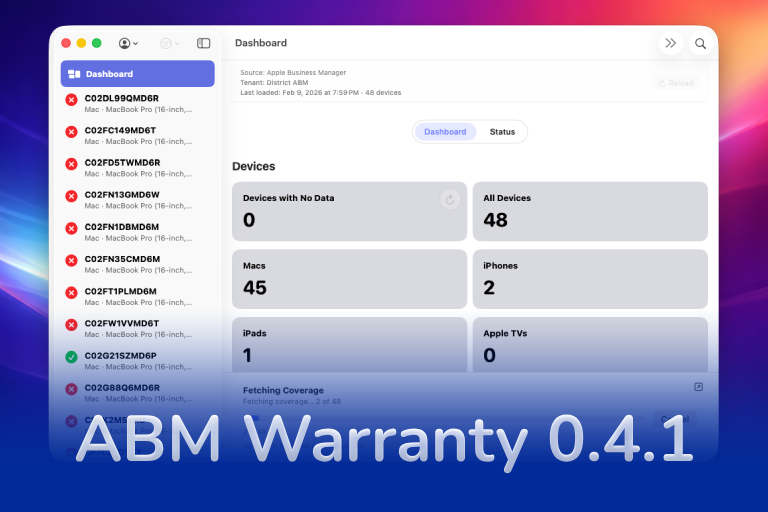
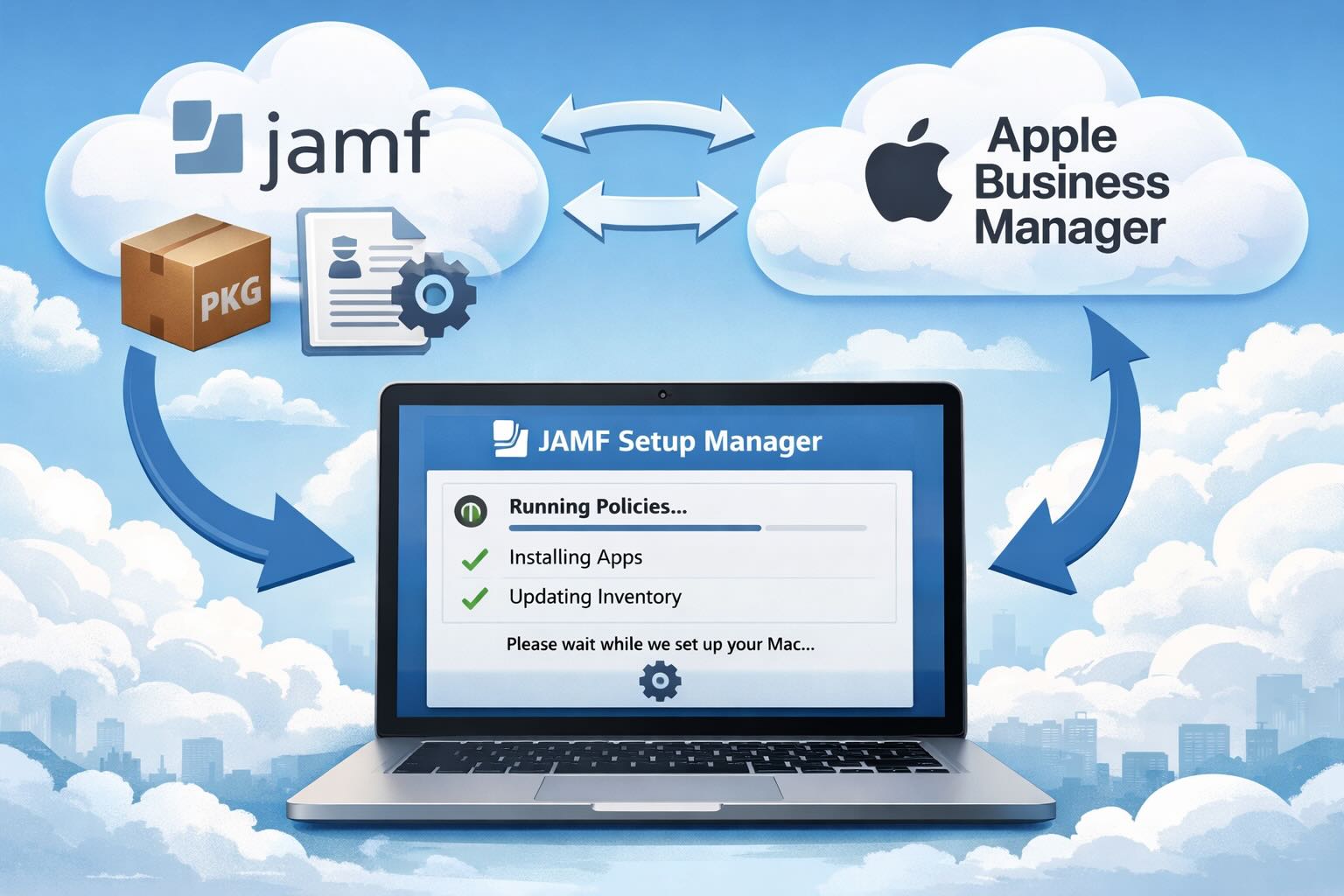
ABM Warranty 0.4.1

The 0.4.x release series for ABM Warranty is focused on operational scale. The earlier 0.3 releases were about trust, correctness, and stabilizing the foundation. Version 0.4.1 builds directly on that work by making the app more practical for consultants, internal IT teams, and managed service providers who need to support multiple environments without losing isolation, control, or visibility. This includes improvements to user interface and workflow, as well as enhanced reporting capabilities to help these users manage their workflows more efficiently.

Read more

Why Apple Fleet Risk Isn’t a Security Problem—Until It Is

Security and risk are often treated as interchangeable concepts in modern IT environments, but they are not the same discipline. Security focuses on controls, enforcement, and prevention. Risk management, by contrast, is concerned with likelihood, impact, and consequence across operational, financial, and organizational domains. Frameworks such as those published by NIST make this distinction explicit: risk assessment is not a technical exercise, but a business one. Technology informs risk decisions, but it does not define them.

Read more

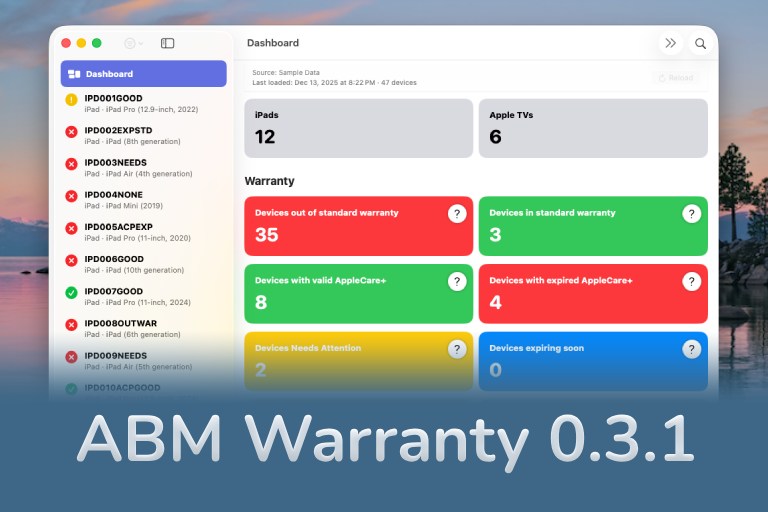
ABM Warranty 0.3.1

The 0.3.x release series for ABM Warranty is about tightening guarantees. Where earlier releases focused on surfacing data and making long-running operations observable, 0.3.x focuses on ensuring that what you see is complete, consistent, and safe to trust—particularly as the app is used in larger, slower, and more varied environments. This shift in focus aims to provide a more reliable foundation for users who require higher levels of assurance from their warranty management system.

Read more

ABM Warranty 0.4.1 Walkthrough: Wrap-Up and Beta

In this final ABM Warranty 0.4.1 walkthrough, I’m wrapping up the last features I had not covered directly in the earlier videos and then focusing on support, community, and the beta program. I also want to show where the support resources live inside the app so you know where to go if you need help, documentation, or a way to send useful feedback. Additionally, I'll be covering some of the key features that were updated since the previous version, including any bug fixes or improvements made to existing functionality.

Read more

ABM Warranty 0.4.1 Walkthrough: Managed Preferences

In this part of the ABM Warranty 0.4.1 walkthrough series, I'm focusing on managed preferences and the credential packaging workflow. In the last video, I covered multiple credentials inside the app itself. In this one, I'm showing how to package those credentials so they can be deployed securely through MDM. This process is a crucial step in ensuring that your credentials are properly configured and protected within your organization's mobile device management system.

Read more

QuickPKG - More to Unpack

A few days ago I released a review of QuickPKG, a tool I love and use almost daily. What I really love about packaging and QuickPKG is that no matter what Mobile Device Management (MDM) solution I'm working with at any given moment, it provides a universal way to create a quick package to import into JAMF, Mosyle, or any MDM. This consistency is particularly valuable when switching between projects or environments, as the process remains the same regardless of the specific MDM being used.

Read more

Low Profile Walkthrough and Review

Today I’m walking through Low Profile, a utility from Nindi Gill that I use when I want to inspect profiles already installed on a Mac and figure out whether those profiles contain issues I need to clean up. The value is that Low Profile gives me a straightforward way to inspect profiles installed on any Mac. This simplicity makes it easy for me to identify and address potential problems, which is especially useful when working with multiple machines or troubleshooting complex profile configurations.

Read more

ABM Warranty 0.4.1 Walkthrough: Multiple Credentials

In this part of the ABM Warranty 0.4.1 walkthrough series, I’m focusing on multiple credentials. In the first video, I showed the basic setup and how to add a single credential. Now, I want to explore what happens when I remove a credential, what changes occur when I add more than one, and how the app behaves once there are multiple contexts in play. This will help clarify any potential issues or inconsistencies that may arise with multiple credentials.

Read more

QuickPKG Walkthrough and Review

I use QuickPKG when I need to turn an application, DMG, or ZIP file into a package quickly without wasting time in a heavier packaging workflow. This post follows the same path as my video: what QuickPKG is, where to get it, how I run it, what a simple packaging example looks like, and where I think admins need to be careful about potential pitfalls that can arise from using this tool.

Read more

ABM Warranty 0.4.1 Walkthrough: Introduction

In this first ABM Warranty 0.4.1 walkthrough, I want to show you what the app actually does before I get into the more specific feature videos. This is the broad introduction. I’m walking through the dashboard, how I think about the warranty cards, how released devices are handled, how the filters work, how to add credentials, where the data is stored locally, and what the logging and security model looks like.

Read more

Why Focusing ON Your Business Can Lead to Greater Success

One of the hardest transitions for a business owner is moving from constant delivery work toward the kind of leadership that allows the business to scale. It is difficult to focus on the business when you are still carrying too much of the day-to-day burden yourself. Even when growth creates more resources, that does not automatically mean the work can be shared effectively right away. In fact, it's common for owners to struggle with delegating tasks and trusting others to handle responsibilities, leading to a prolonged period of burnout and...

Read more

The Importance of Effective Team Communication in Dynamic Environments

Effective team communication becomes far more important as a business moves from a small, familiar operating rhythm into a larger and more dynamic environment. When you are used to running a business as an owner-operator, much of the context lives in your head. Decisions move quickly because you already know the clients, the priorities, and the reasons behind each choice. In a larger organization, that same instinct does not scale without stronger communication.

Read more

Clearing Up Misconceptions: How Mergers Can Benefit Clients

When clients hear that a company has merged, their first assumption is often that the change is being driven by money rather than service. That reaction is understandable. If the business already seemed stable, a merger can look like a move that benefits ownership far more than it benefits the customer. That is why one of the most important parts of any merger is proving, through action, that the client experience will improve rather than decline.

Read more

Why Building a Strong Team is Essential for Post-Merger Success: Our Experience

Building a strong team after a merger is rarely as simple as adding headcount. From the outside, it can seem like joining a larger organization should immediately create more capacity, more support, and a clearer path to growth. In practice, that is not always how it works. A merger may provide a stronger platform, but it does not automatically come with an instant staffing plan or a perfect roadmap for how responsibilities will be divided.

Read more

Embracing the Change: How I Transitioned from Independent Operator to Employee

Transitioning from business owner to employee is one of the hardest identity shifts an entrepreneur can make. Running your own company means you are used to setting priorities, making final decisions, and carrying direct responsibility for the outcome. After an acquisition, that changes quickly. You may still have leadership responsibilities, but you are now operating inside a larger structure where authority is shared and not every decision is yours to make.

Read more

Bridging the Gaps: Our Focus on Unifying for Success

Acquisition changes more than ownership. It changes how you work, how you lead, and how much control you have over the decisions that shape the business every day. That shift can be harder than many owners expect, especially when you have spent years operating with full authority and direct accountability for every client relationship. As a result, it's not uncommon for acquired businesses to experience an adjustment period during which they adapt to new systems, processes, and expectations.

Read more

How SMS Can Revolutionize Your Client Assistance - Here's Why

One of the most practical ways to improve client support is to meet people where they already communicate. For many clients, that means text messaging. When used correctly, SMS can become a fast, effective support channel that reduces friction, improves response times for simple issues, and creates a cleaner record of day-to-day interactions. This approach also allows support teams to respond quickly to urgent matters, while keeping the conversation history organized and easily accessible for future reference.

Read more

Revolutionizing Tech Support with Apple Messages for Business

Apple Business Chat is one of the most practical examples of how modern tech support can become faster, cleaner, and easier for both clients and technicians. For support teams that already rely on SMS-style communication, it is not just another channel. It is a more structured way to bring real-time support into the Apple ecosystem while keeping the business side of the interaction organized. This approach allows support teams to maintain control over the conversation flow, ensuring that issues are resolved efficiently and effectively without unnecessary back-and-forth.

Read more

The Pitfalls of Growing A Team: Lessons Learned

Growing a team sounds straightforward on paper, but in practice it introduces costs and complexity that many business owners underestimate. It is easy to model growth by assuming that one additional person will quickly become productive, bill enough work, and create immediate operational relief. What often happens instead is that the owner has to spend significant time training, onboarding, and correcting work before that new hire becomes a true net gain.

Read more

Enhancing Cybersecurity on macOS: Empowering Users for a Safer Digital Journey!

macOS has earned a strong reputation for built-in security, but the real value of the platform is not just that protections exist. It is that Apple continues pushing the operating system toward more context-aware security decisions that help users make better choices before a problem becomes a breach. This approach allows users to understand and mitigate potential risks in real-time, rather than simply reacting to threats after they've occurred.

Read more