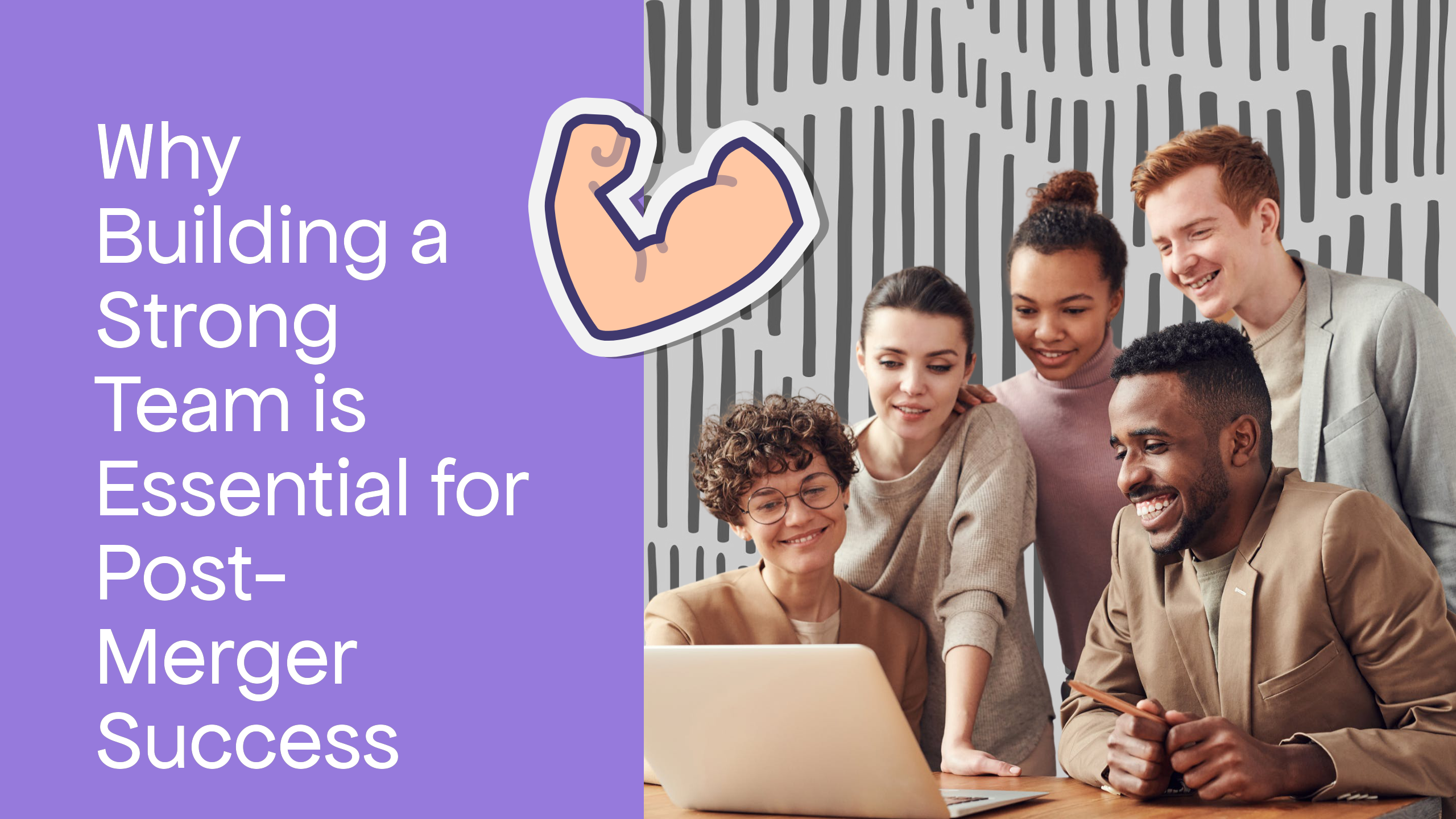

Building a strong team after a merger is rarely as simple as adding headcount. From the outside, it can seem like joining a larger organization should immediately create more capacity, more support, and a clearer path to growth. In practice, that is not always how it works. A merger may provide a stronger platform, but it does not automatically come with an instant staffing plan or a perfect roadmap for how responsibilities will be divided.
That creates a difficult adjustment for any founder who has spent years making the final call. Once the business is part of something larger, you may still have influence, but you are no longer the only person driving the direction. There will be moments when decisions are made that you would not have made yourself. That is one of the hardest realities of moving from business owner to part of a broader leadership team. You still care about the outcome, but you now have to work through a structure where decisions are shared, layered, and sometimes slower than what you would choose on your own.
That shift is not only operational. It is personal. Larger teams bring more coordination, more ambiguity around roles, and more of the internal dynamics that come with any growing organization. When multiple business units are being integrated, it is not always obvious who owns which decision, which process takes priority, or how competing viewpoints should be resolved. Those are not signs that the merger is failing. They are part of the learning cost that comes with turning separate companies into one functioning team.
The key is whether the organization is learning from those moments. No company gets every decision right, especially during integration. Mistakes happen. Direction changes. Some calls will prove wrong in hindsight. The more important question is whether the team can recover, adapt, and keep moving forward. If the business is learning, improving, and not losing ground, then even imperfect decisions can still lead to long-term progress.
That is where team building becomes essential. Strong post-merger teams are not built only through hiring. They are built through trust, clarity, and a willingness to let go of the idea that there is only one right way to do things. For former owners, that often means letting go of the perfection of how you would have done it yourself and learning to contribute inside a process that now includes other leaders, other viewpoints, and other constraints.
That does not mean lowering standards. It means recognizing that collaboration has a cost, but it also creates resilience that is difficult to build alone. When several established teams come together, the real challenge is not just combining people on paper. It is aligning expectations, responsibilities, and decision-making in a way that allows the business to grow without losing momentum. That work is slow, but it is also what turns a merger from a transaction into a stronger long-term organization.
511: Interview With Jon Brown, VP Of Technology & Cybersecurity at Interlaced.io
AI Usage Transparency Report
AI Era · Written during widespread use of AI tools
AI Signal Composition
Score: 0.15 · Low AI Influence
Summary
Building a strong team after a merger requires trust, clarity, and collaboration to overcome the challenges of integrating separate companies into one functioning team.
Related Posts

Why Focusing ON Your Business Can Lead to Greater Success
One of the hardest transitions for a business owner is moving from constant delivery work toward the kind of leadership that allows the business to scale. It is difficult to focus on the business when you are still carrying too much of the day-to-day burden yourself. Even when growth creates more resources, that does not automatically mean the work can be shared effectively right away. In fact, it's common for owners to struggle with delegating tasks and trusting others to handle responsibilities, leading to a prolonged period of burnout and...
The Importance of Effective Team Communication in Dynamic Environments
Effective team communication becomes far more important as a business moves from a small, familiar operating rhythm into a larger and more dynamic environment. When you are used to running a business as an owner-operator, much of the context lives in your head. Decisions move quickly because you already know the clients, the priorities, and the reasons behind each choice. In a larger organization, that same instinct does not scale without stronger communication.

Clearing Up Misconceptions: How Mergers Can Benefit Clients
When clients hear that a company has merged, their first assumption is often that the change is being driven by money rather than service. That reaction is understandable. If the business already seemed stable, a merger can look like a move that benefits ownership far more than it benefits the customer. That is why one of the most important parts of any merger is proving, through action, that the client experience will improve rather than decline.

Embracing the Change: How I Transitioned from Independent Operator to Employee
Transitioning from business owner to employee is one of the hardest identity shifts an entrepreneur can make. Running your own company means you are used to setting priorities, making final decisions, and carrying direct responsibility for the outcome. After an acquisition, that changes quickly. You may still have leadership responsibilities, but you are now operating inside a larger structure where authority is shared and not every decision is yours to make.

Bridging the Gaps: Our Focus on Unifying for Success
Acquisition changes more than ownership. It changes how you work, how you lead, and how much control you have over the decisions that shape the business every day. That shift can be harder than many owners expect, especially when you have spent years operating with full authority and direct accountability for every client relationship. As a result, it's not uncommon for acquired businesses to experience an adjustment period during which they adapt to new systems, processes, and expectations.
How SMS Can Revolutionize Your Client Assistance - Here's Why
One of the most practical ways to improve client support is to meet people where they already communicate. For many clients, that means text messaging. When used correctly, SMS can become a fast, effective support channel that reduces friction, improves response times for simple issues, and creates a cleaner record of day-to-day interactions. This approach also allows support teams to respond quickly to urgent matters, while keeping the conversation history organized and easily accessible for future reference.
Revolutionizing Tech Support with Apple Messages for Business
Apple Business Chat is one of the most practical examples of how modern tech support can become faster, cleaner, and easier for both clients and technicians. For support teams that already rely on SMS-style communication, it is not just another channel. It is a more structured way to bring real-time support into the Apple ecosystem while keeping the business side of the interaction organized. This approach allows support teams to maintain control over the conversation flow, ensuring that issues are resolved efficiently and effectively without unnecessary back-and-forth.

The Pitfalls of Growing A Team: Lessons Learned
Growing a team sounds straightforward on paper, but in practice it introduces costs and complexity that many business owners underestimate. It is easy to model growth by assuming that one additional person will quickly become productive, bill enough work, and create immediate operational relief. What often happens instead is that the owner has to spend significant time training, onboarding, and correcting work before that new hire becomes a true net gain.

Enhancing Cybersecurity on macOS: Empowering Users for a Safer Digital Journey!
macOS has earned a strong reputation for built-in security, but the real value of the platform is not just that protections exist. It is that Apple continues pushing the operating system toward more context-aware security decisions that help users make better choices before a problem becomes a breach. This approach allows users to understand and mitigate potential risks in real-time, rather than simply reacting to threats after they've occurred.

Unleashing the Power of Cybersecurity Tools: Empowering People in the Digital Realm!
One of the hardest parts of cybersecurity is that the problem is not purely technical. The real challenge sits at the intersection of tools and human behavior. Companies can buy better platforms, deploy stronger controls, and invest in more advanced protections, but those tools still depend on people making better decisions every day. This means that even with the most robust systems in place, a single misstep or careless action can compromise security.