

Last quarter, Apple’s Services segment generated a whopping $15.8 billion in revenue, 14% of the company’s total—sales of apps, media, and subscriptions are a big deal to Apple. And if you’re like us, you’re probably now paying Apple for services like Apple Music, extra storage for iCloud Photos, various app purchases and subscriptions, and perhaps the new Apple Fitness+.
It’s a lot to keep track of, but particularly with subscriptions, it’s essential to stay on top of the charges and make sure you’re paying only for services you’re still using. Happily, Apple enables you to do that on both the Mac and the iPhone/iPad.
Review Your Purchase History
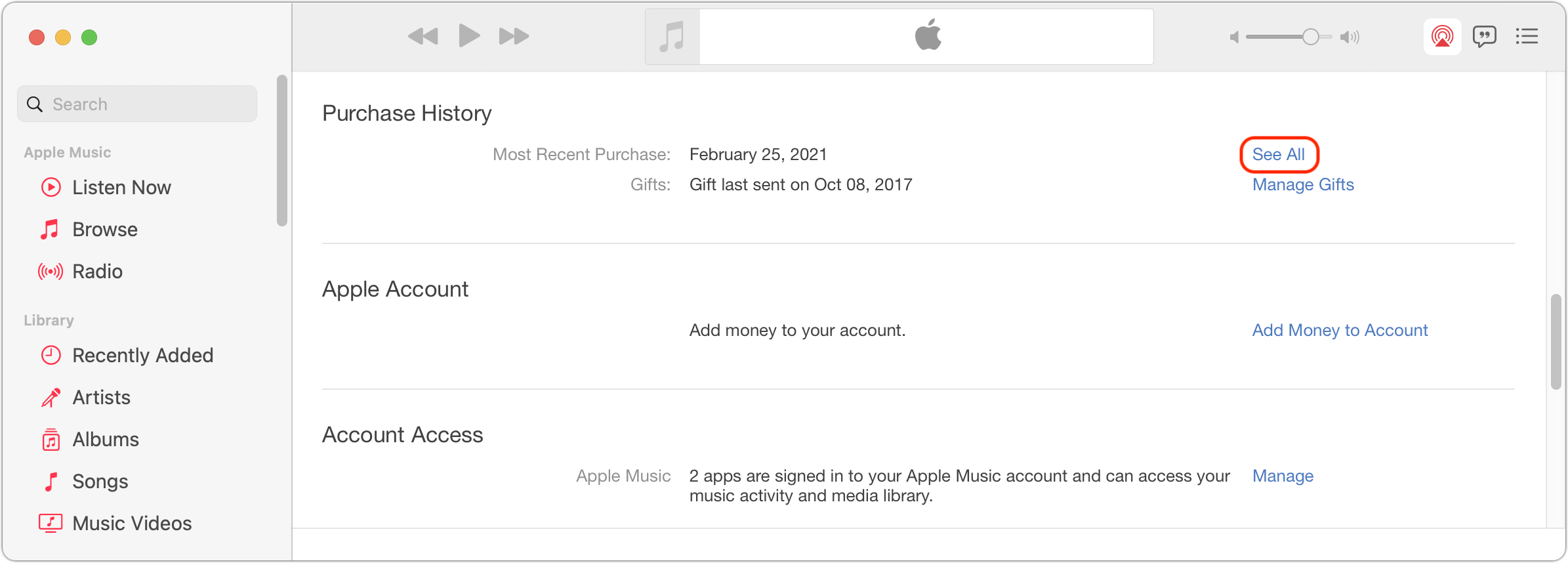
On a Mac running macOS 11 Big Sur or 10.15 Catalina, you can see your purchase history in the Music app. If you’re running an earlier version of macOS, you’ll use iTunes instead. In either app, choose Account > View My Account. Scroll down to Purchase History and click See All at the right.
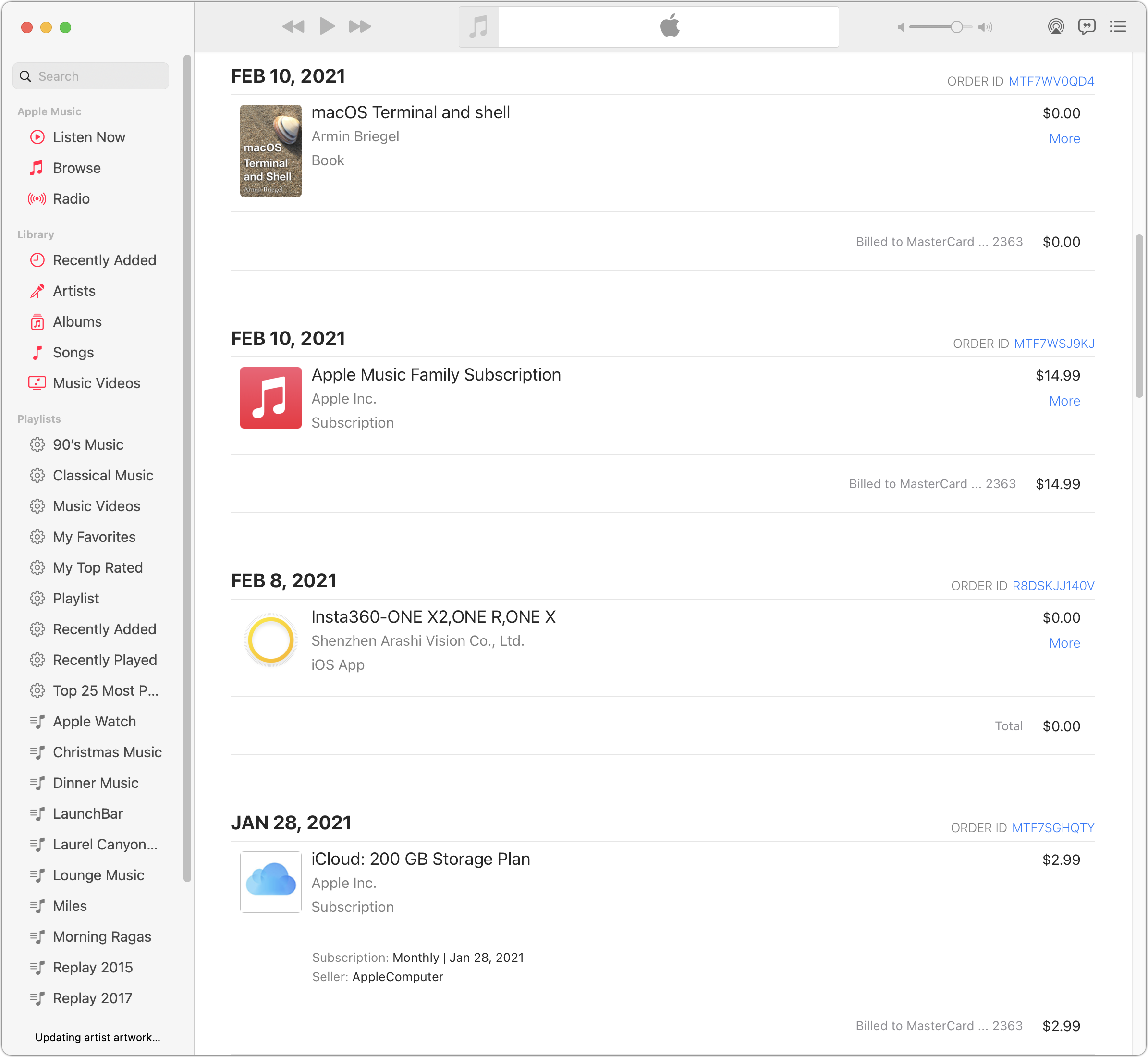
In Purchase History, you’ll see every one of your purchases from Apple, whether it’s an app from the App Store, a book from Apple Books, or a subscription like Apple TV+ (even when it’s free). You can click the More link to the right of any purchase for a few additional details (in the screenshot below, these are showing for iCloud) or click the blue Order ID link for even more details. Also hidden inside the Order ID information for any item you paid for is a Resend link that sends you another email copy of the invoice for that purchase.
On an iPhone or iPad, navigate to Settings > Your Name > Media & Purchases > View Account > Purchase History (you’ll need to scroll down for the last one). The Purchase History screen shows the same information as on the Mac, and you can tap the Total Billed line under each item for the equivalent of the Order ID details, complete with a button for resending the email invoice.

Apart from merely displaying your purchases, the Purchase History screen can raise two other questions:
-
Why isn’t an item I purchased showing up? The main reason why this happens is if the purchase was made with a different Apple ID. If you have two or more Apple IDs, that could explain it, or if you’re participating in Family Sharing, a family member might have made the purchase. In either case, you must sign in with the appropriate Apple ID to see the purchase.
-
What are these purchases that I don’t recognize? The most likely explanation is that someone in your Family Sharing group made a purchase without telling you. You can turn on Ask to Buy if you have children in your family. If you’ve shared your Apple ID and password with someone else (never do that!) who has bought items without your knowledge, we recommend changing your Apple ID password immediately. If you still can’t figure it out, contact Apple Support.
Manage Subscriptions
For the most part, app, book, and other purchases aren’t that expensive, but subscription fees can add up quickly. We recommend checking your subscriptions periodically to make sure they’re all still relevant and canceling any that aren’t. Here’s how.
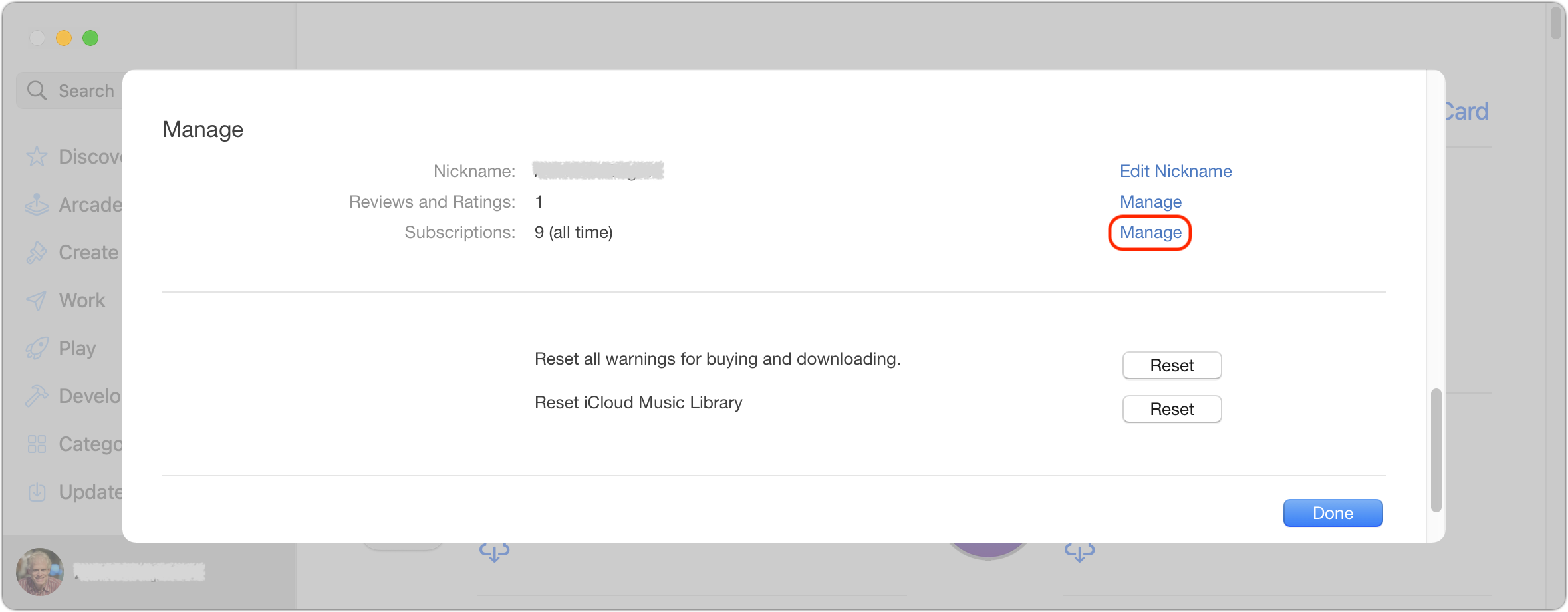
On the Mac, you can manage your subscriptions in the Music app in Big Sur or Catalina, though Apple recommends the App Store app. In the App Store app, click your name or picture in the lower-left corner and then click View Information at the upper right. In the window that appears, scroll down to Manage and click the Manage link to the right of Subscriptions.
Next, you’re shown a list of all your active and expired subscriptions.
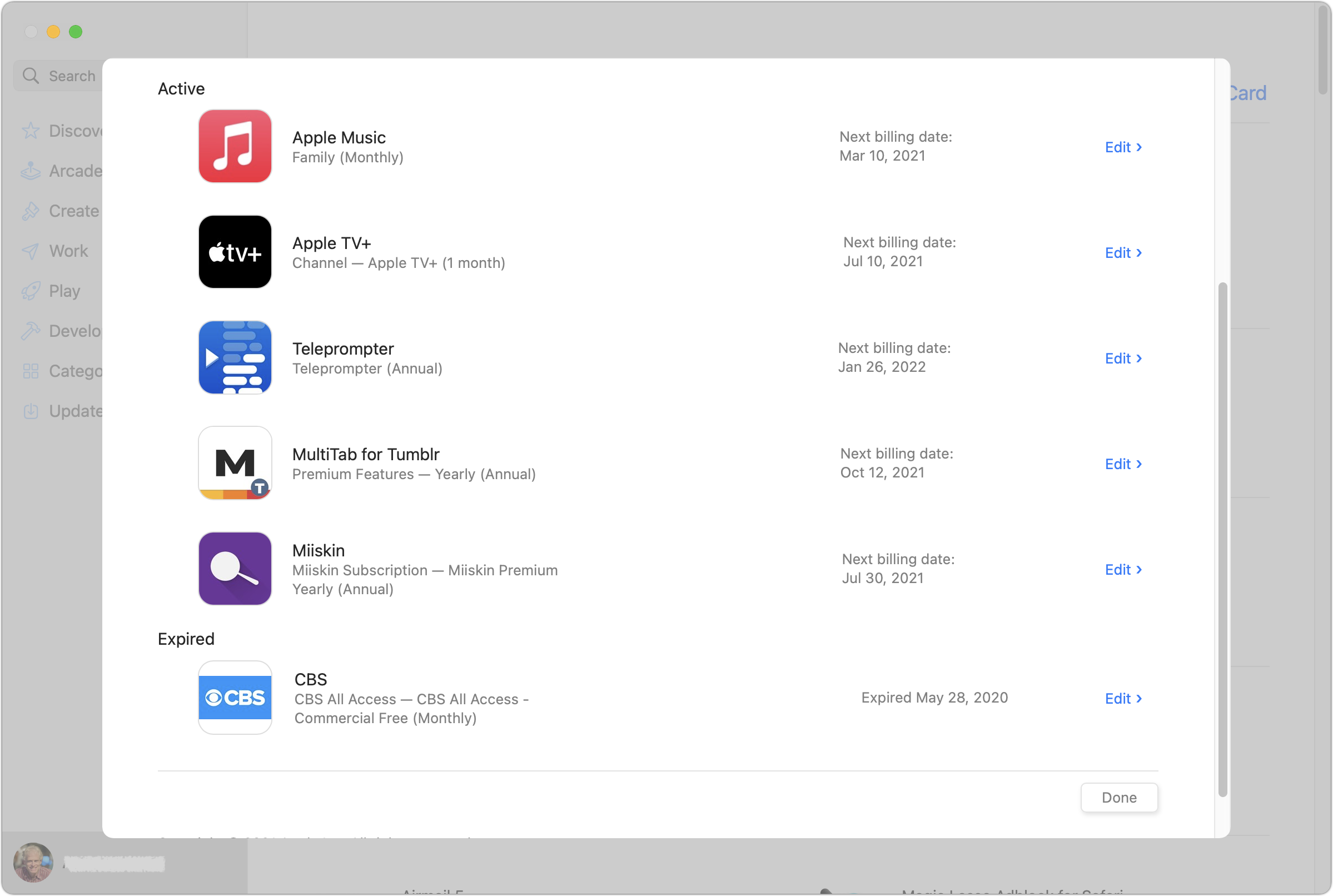
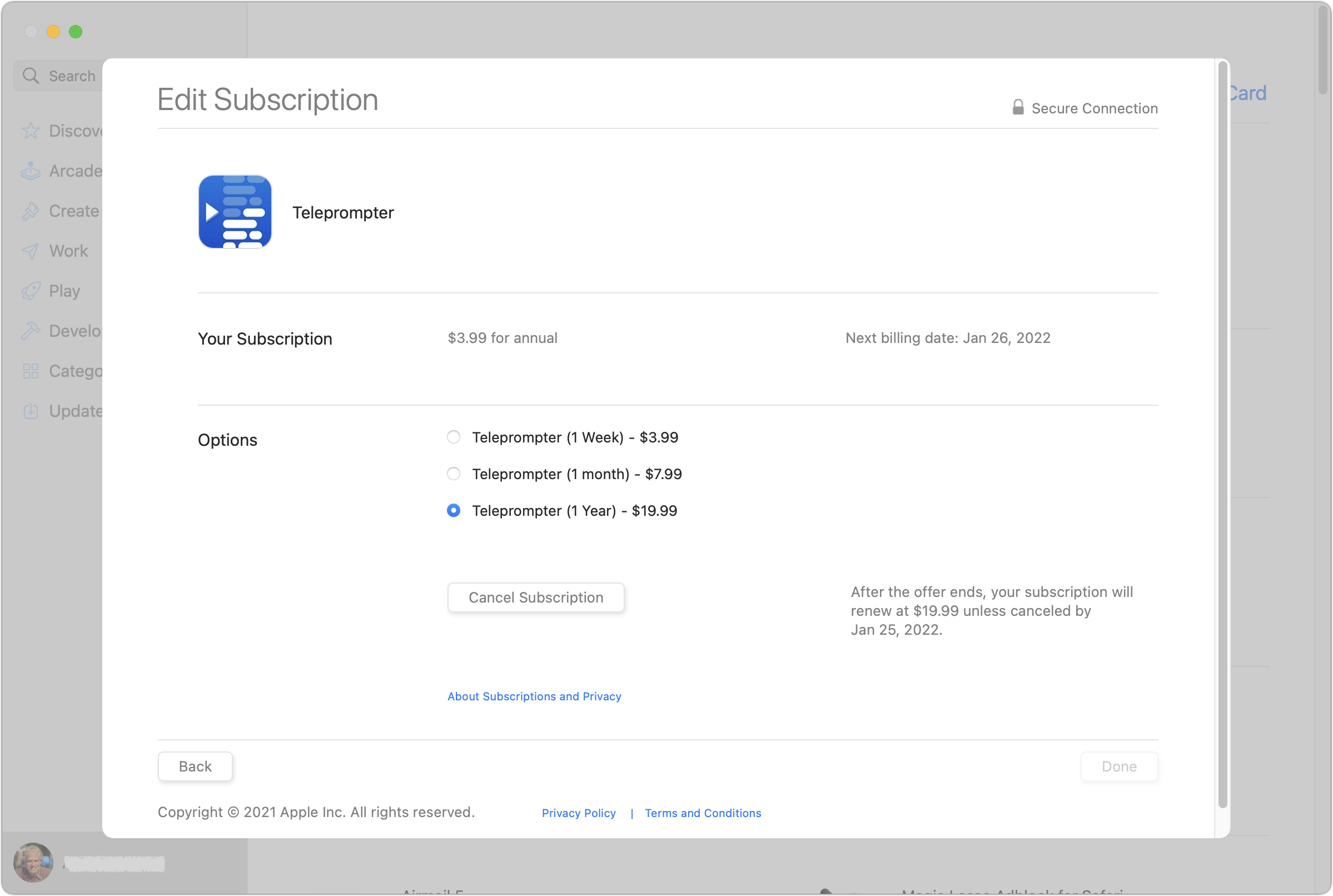
To see more details about a subscription, click Edit to the right of the subscription’s listing. You can now change your billing period using the radio buttons and cancel the subscription by clicking Cancel Subscription.
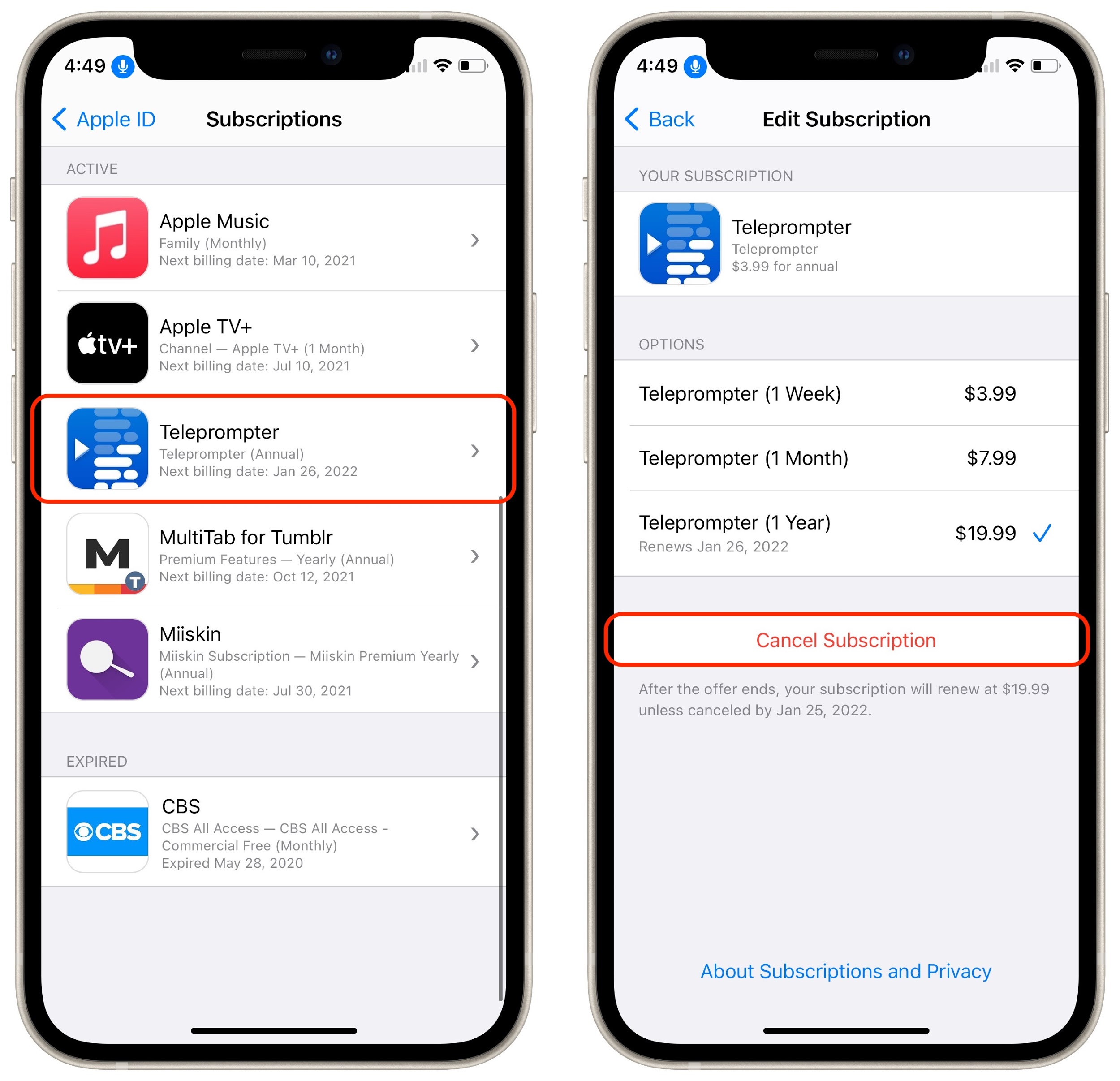
On an iPhone or iPad, it’s a little more straightforward. Tap Settings
Your Name > Subscriptions to see a list of all your subscriptions. Tap one of them to change the billing frequency or cancel it.
Although it’s easier to manage subscriptions on a Mac, iPhone, or iPad, you can also cancel subscriptions from the Apple Watch or Apple TV. Here’s what to do:
-
On the Apple Watch, open the App Store app, scroll to Account and tap it, tap Subscriptions, tap the desired subscription, and tap Cancel Subscription.
-
On the Apple TV, you can see subscriptions only for installed tvOS apps, and thus only for the Apple TV HD and Apple TV 4K. (For the third-generation Apple TV, use a Mac, iPhone, or iPad to manage subscriptions.) Open Settings, select Users & Accounts, select your account, select Subscriptions, choose the desired subscription, and select Cancel Subscription.
Finally, what if you don’t see the subscription you want to cancel? There are a few possibilities:
-
You can’t cancel iCloud storage plans or AppleCare plans in this way. Apple provides separate instructions for downgrading or canceling iCloud storage plans and for canceling AppleCare plans.
-
If a family member signed up for the subscription, you can’t cancel it. Ask them to do so using their device.
-
Not all app subscriptions are billed through Apple. You’ll need to cancel outside subscriptions through the original vendor.
-
As with missing purchases, if you signed up for the subscription using a different Apple ID, you’ll need to switch to that Apple ID to cancel.
We hope this article has shed some light on purchases and subscriptions you make through various Apple online stores.
AI Usage Transparency Report
Pre-AI Era · Written before widespread use of generative AI tools
AI Signal Composition
Score: 0.06 · Low AI Influence
Summary
This article provides a comprehensive guide to managing purchases and subscriptions on Apple devices, including how to review purchase history, manage subscriptions, and cancel unwanted services.
Related Posts

Check Encrypted HFS+ Drives Before macOS 28
Apple says macOS 28 will not support encrypted Mac OS Extended volumes, so older encrypted HFS+ external drives need to be identified, backed up, decrypted, converted, or reformatted before that upgrade.
How I Keep Up With ISC2 CPE Credits Without Making It a Second Job
Keeping up with ISC2 CPE credits is easier when you treat it like a normal professional habit instead of a renewal emergency. Here is the system I use across CISSP, CCSP, SSCP, and CSSLP, with free and low-friction sources for webinars, books, training, and work-based credits.
Leaving Flickr: Migrating 20,000+ Photos to Synology and Taking Back Control
There’s a certain kind of friction you start to notice when you’ve been using a service for a long time. Not enough to make you leave immediately, but enough to make you pause. Flickr had been that kind of service for me. It quietly held years of photos, uploads from old phones, albums I hadn’t looked at in ages, and a massive "Auto Upload" collection that had grown into something I didn’t fully understand anymore.

How I Finally Passed the PMP Exam (After 12 Years of Waiting)
Back in 2013, I registered for a PMI membership with every intention of pursuing my PMP certification. I downloaded the handbook, bookmarked the eligibility requirements, and even told a few friends that I was going to do it "soon." At the time, I thought getting certified would be a straightforward process, but little did I know what lay ahead in terms of studying and preparation.
10 Things You Didn't Know You Could Do With Apple Configurator (That Save Mac Admins Hours)
Most of us treat Apple Configurator like a fire extinguisher: break glass, DFU, restore, move on. But it can do a lot more, and when you know the edges, you can turn a bricked morning into a ship-it afternoon. Below are ten things I regularly use (or wish I’d used sooner) that demonstrate its capabilities beyond just emergency recovery.
The Evolution of Apple Certification: A Journey Through Versions, Challenges & Growth
When I recently passed the Apple Certified Support Professional (ACSP) exam again, I paused to reflect — not just on this milestone, but on the long path I’ve walked through Apple’s certification landscape. My first certification dates back to macOS 10.5, and over the years, I’ve earned credentials across nearly every version since. In that time, the exams — and Apple itself — have transformed significantly.
Secure Software, Secure Career: How I Passed the CSSLP
After passing the CISSP earlier this year, I decided to follow it up with the **Certified Secure Software Lifecycle Professional (CSSLP)** certification. For those unfamiliar, CSSLP is an ISC2 certification that focuses specifically on secure software development practices across the full SDLC—from requirements and design to coding, testing, deployment, and maintenance. My goal in pursuing this certification was to further develop my skills in ensuring the security of software throughout its entire lifecycle.
Managing Bring Your Own Device (BYOD) for Android with Microsoft Intune
Alright, so today we're going to be talking about the management of bring your own device BYOD for Android devices. There's a lot of information out there for the management of iOS devices and you can do that with pretty much any Apple MDM on the market. We just happen to use Jamf where I work, but you could use anything from Braavos to SimpleMDM to Kanji or JumpCloud. Mosyle is also a great option.

BYO with me in 2025: iOS with User Enrollment in JAMF Pro
It really depends on your company's needs. For example, many companies need to hire 1099 contractors and in such a case they come with their own devices but not the correct security settings or enforcements. Remember BYOD is a security construct. The idea here is that you should be securing the company's sensitive data in all forms. This may involve implementing policies for contractor-owned devices, ensuring that all devices accessing company data meet minimum security standards, and regularly reviewing and updating these standards to stay ahead of emerging threats.
Securing BYOD Email Access: Exploring Strategies in Microsoft 365
In today’s mobile-first world, organizations increasingly rely on Bring Your Own Device (BYOD) programs to empower employees while optimizing costs. However, this flexibility introduces unique challenges, particularly around securing email access. To mitigate risks, we are implementing a comprehensive strategy to block email access on non-company devices by default and ensure only sanctioned apps can access organizational email accounts. This approach will help prevent unauthorized access and data breaches, aligning with our commitment to maintaining the security and integrity of company communications.