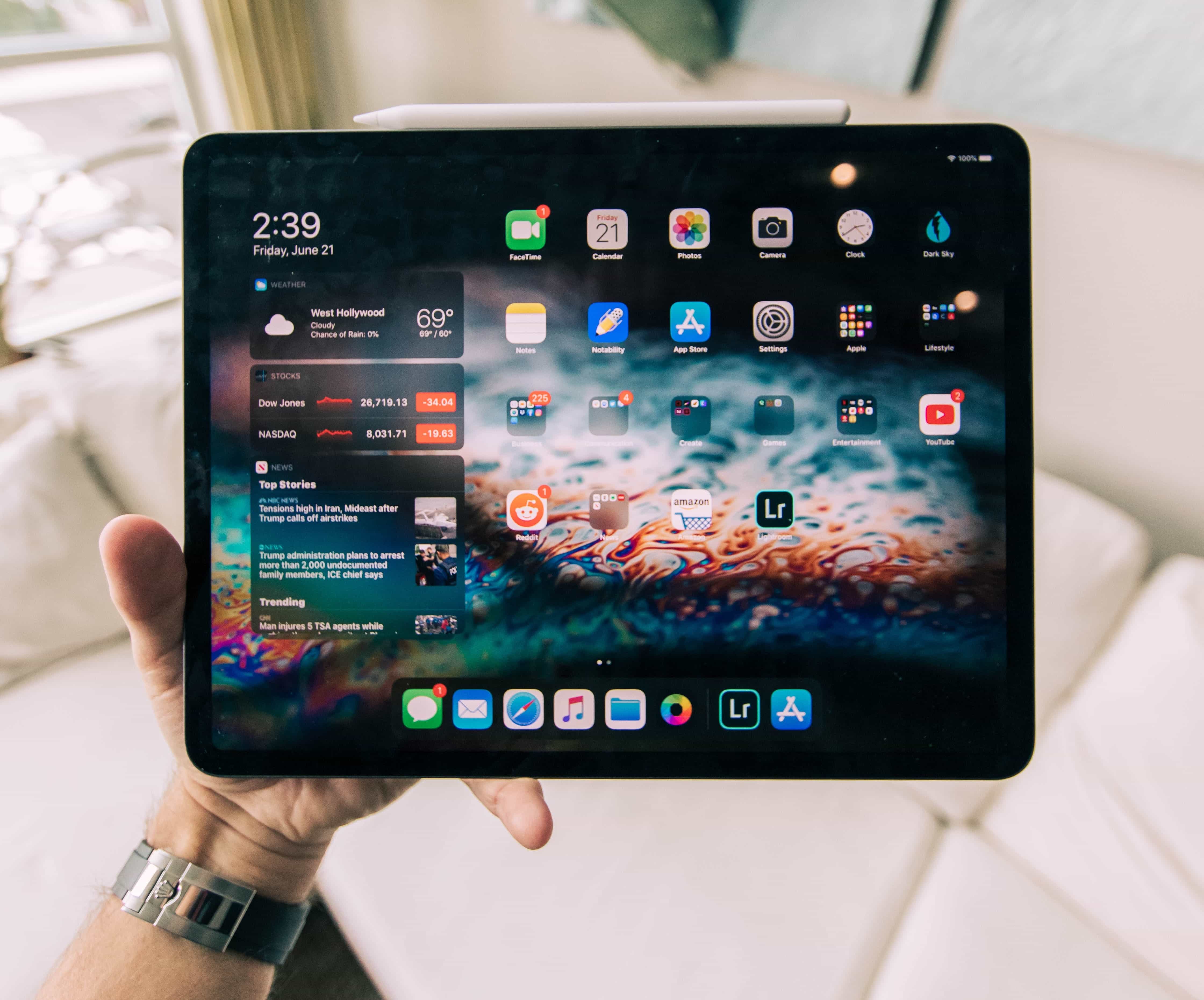

Taking photos is a popular use of the iPhone, and Apple has said that the improved cameras gave this year’s iPhone 11 Pro models their “Pro” designation. But Apple continually works to improve the Photos app as well. Taking great photos is only half the job—you also have to be able to find, edit, and enjoy your photos, and that’s where the company focused its efforts in iOS 13 and iPadOS 13 (which we’ll refer to collectively as iOS 13 from now on). Here’s what’s new.
Years, Months, Days, All Photos
Previously, Photos grouped photos first by years, then by “collections,” and finally by “moments.” To simplify things, Photos now offers four more sensible groups: Years, Months, Days, and All Photos.
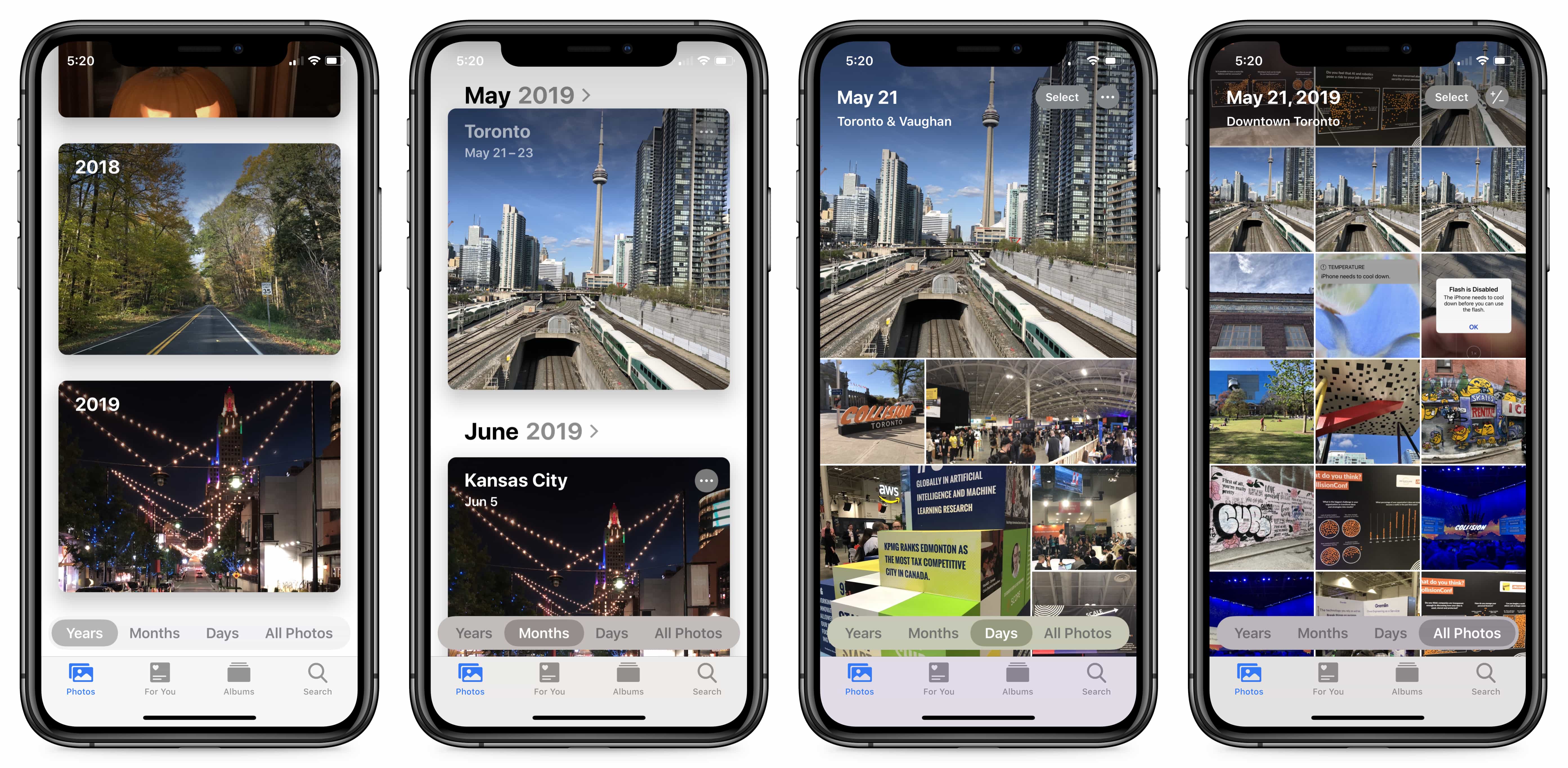
Years shows a single image that helps you keep the years apart—previous years’ images come from the same time of year as the current day. Next, tap a year icon or the Months button to see a few tiles representing the events at which you took photos in each month. To zoom in again, tap the Days button or any event to see a curated selection of photos for each day you took photos in that month.
The key word above is “curated”—Photos is using artificial intelligence to show you just the best or most representative images and eliminate similar shots, so some photos won’t appear at all in Days view. When that happens, you’ll see a +# tag on the last image indicating the number of hidden images. To see everything, tap that +# tag or the All Photos button. You may find yourself wanting to use All Photos a lot if Photos is hiding images from you in Days view.
Enhanced Photo and Video Editing
Photos in iOS 13 also gains significantly more editing capabilities, bringing it closer to par with the Mac version. In iOS 12, you could adjust some light, color, and black-and-white options. iOS 13 retains the light and color options and bolsters them with new tools and an improved interface. The black-and-white options disappear, but you can simulate them by applying a monochrome filter like Noir, Silvertone, or Mono, and then using the rest of the editing tools.
When you tap the adjust button while editing an image, Photos displays a horizontally scrolling list of 16 controls, each with a circular button on top and a slider below. Move the slider to adjust that setting with a real-time preview. Also notice how the circle fills in to reflect what you’ve done. All edits are non-destructive, and you can tap the circle to turn its associated edits off, or tap again to turn them back on. This tap-off/tap-on interface works well for comparing before and after versions.
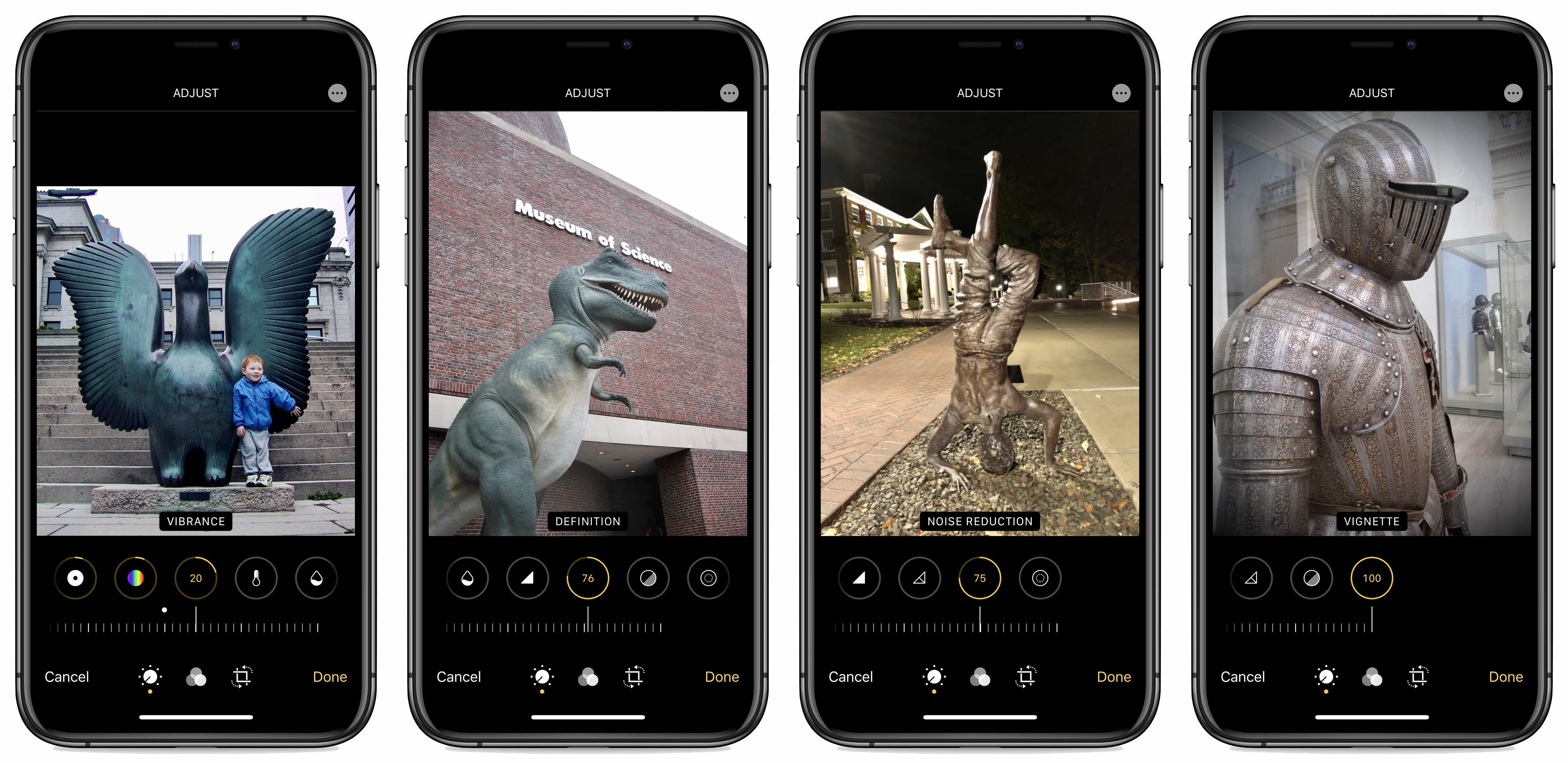
The full list of controls now includes:
- Auto: Tap to apply suggested enhancements—it’s always worth a try!
- Exposure: Simulates changing the amount of light that reaches the camera sensor
- Brilliance: Applies region-specific adjustments to brighten dark areas, pull in highlights, and add contrast to reveal hidden detail
- Highlights: Increases or decreases detail in light portions of the image
- Shadows: Increases or decreases detail in darker portions of the image
- Contrast: Adjusts the contrast of the photo
- Brightness: Adjusts the overall brightness of the image
- Black Point: Sets the point at which the darkest parts of the photo become completely black
- Saturation: Adjusts the overall color intensity of the image
- Vibrance Boost muted colors without affecting skin color or saturated colors
- Warmth Adjusts the amount of yellow or blue in the image to make it feel warmer or cooler
- Tint Adjusts the amount of magenta or green in the image to change the tint
- Sharpness Makes edges of objects crisper and more well-defined
- Definition Adds contour and shape as well as mid-tone definition and local contrast (try it—it’s often helpful)
- Noise Reduction Smooths graininess and eliminates light speckles in dark images
- Vignette Darkens the edges of the image to focus attention on the subject at the center
Previously, Photos allowed you to crop and straighten an image, and iOS 13 also now lets you adjust the vertical and horizontal perspective. You likely won’t change perspectives often, but it’s nice to have the option.
Even more impressive, Photos in iOS 13 lets you apply all these edits—the adjustments and cropping/tilting—to videos as well as still images. Video edits are non-destructive, too, which makes it easy to play with effects. Photos video editing may not compare with the full features of a video editor like iMovie, but it’s a huge step forward.
Other Improvements
Apple also tweaked other aspects of Photos.
- Multiple search terms work better now, so it’s easy to search for “cat tree” and find just the pictures of your cat in a tree.
- Live Photos and videos begin playing as you scroll past them, which is pretty neat.
- You can control the intensity of any filter to fine-tune the look of a photo.
- Soundtracks for Memory movies are now based on what you listen to in Apple Music.
- You can now pinch-to-zoom while editing to see the effect of an edit on a portion of the photo.
If you haven’t explored the new features of Photos on your iPhone or iPad after updating to iOS 13 or iPadOS 13, take some time and check them out.
AI Usage Transparency Report
Pre-AI Era · Written before widespread use of generative AI tools
AI Signal Composition
Score: 0.06 · Low AI Influence
Summary
The new Photos app in iOS 13 and iPadOS 13 offers improved features such as better grouping of photos, enhanced photo and video editing capabilities, and other improvements.
Related Posts

Check Encrypted HFS+ Drives Before macOS 28
Apple says macOS 28 will not support encrypted Mac OS Extended volumes, so older encrypted HFS+ external drives need to be identified, backed up, decrypted, converted, or reformatted before that upgrade.

How I Keep Up With ISC2 CPE Credits Without Making It a Second Job
Keeping up with ISC2 CPE credits is easier when you treat it like a normal professional habit instead of a renewal emergency. Here is the system I use across CISSP, CCSP, SSCP, and CSSLP, with free and low-friction sources for webinars, books, training, and work-based credits.

Leaving Flickr: Migrating 20,000+ Photos to Synology and Taking Back Control
There’s a certain kind of friction you start to notice when you’ve been using a service for a long time. Not enough to make you leave immediately, but enough to make you pause. Flickr had been that kind of service for me. It quietly held years of photos, uploads from old phones, albums I hadn’t looked at in ages, and a massive "Auto Upload" collection that had grown into something I didn’t fully understand anymore.

How I Finally Passed the PMP Exam (After 12 Years of Waiting)
Back in 2013, I registered for a PMI membership with every intention of pursuing my PMP certification. I downloaded the handbook, bookmarked the eligibility requirements, and even told a few friends that I was going to do it "soon." At the time, I thought getting certified would be a straightforward process, but little did I know what lay ahead in terms of studying and preparation.
10 Things You Didn't Know You Could Do With Apple Configurator (That Save Mac Admins Hours)
Most of us treat Apple Configurator like a fire extinguisher: break glass, DFU, restore, move on. But it can do a lot more, and when you know the edges, you can turn a bricked morning into a ship-it afternoon. Below are ten things I regularly use (or wish I’d used sooner) that demonstrate its capabilities beyond just emergency recovery.
The Evolution of Apple Certification: A Journey Through Versions, Challenges & Growth
When I recently passed the Apple Certified Support Professional (ACSP) exam again, I paused to reflect — not just on this milestone, but on the long path I’ve walked through Apple’s certification landscape. My first certification dates back to macOS 10.5, and over the years, I’ve earned credentials across nearly every version since. In that time, the exams — and Apple itself — have transformed significantly.
Secure Software, Secure Career: How I Passed the CSSLP
After passing the CISSP earlier this year, I decided to follow it up with the **Certified Secure Software Lifecycle Professional (CSSLP)** certification. For those unfamiliar, CSSLP is an ISC2 certification that focuses specifically on secure software development practices across the full SDLC—from requirements and design to coding, testing, deployment, and maintenance. My goal in pursuing this certification was to further develop my skills in ensuring the security of software throughout its entire lifecycle.
Managing Bring Your Own Device (BYOD) for Android with Microsoft Intune
Alright, so today we're going to be talking about the management of bring your own device BYOD for Android devices. There's a lot of information out there for the management of iOS devices and you can do that with pretty much any Apple MDM on the market. We just happen to use Jamf where I work, but you could use anything from Braavos to SimpleMDM to Kanji or JumpCloud. Mosyle is also a great option.

BYO with me in 2025: iOS with User Enrollment in JAMF Pro
It really depends on your company's needs. For example, many companies need to hire 1099 contractors and in such a case they come with their own devices but not the correct security settings or enforcements. Remember BYOD is a security construct. The idea here is that you should be securing the company's sensitive data in all forms. This may involve implementing policies for contractor-owned devices, ensuring that all devices accessing company data meet minimum security standards, and regularly reviewing and updating these standards to stay ahead of emerging threats.

Securing BYOD Email Access: Exploring Strategies in Microsoft 365
In today’s mobile-first world, organizations increasingly rely on Bring Your Own Device (BYOD) programs to empower employees while optimizing costs. However, this flexibility introduces unique challenges, particularly around securing email access. To mitigate risks, we are implementing a comprehensive strategy to block email access on non-company devices by default and ensure only sanctioned apps can access organizational email accounts. This approach will help prevent unauthorized access and data breaches, aligning with our commitment to maintaining the security and integrity of company communications.