

Adobe Firefly now puts two of the most talked-about AI video makers in the same place you already edit. Runway is an American company whose tools have reached film and television productions; Gen-4.5 is its video-generating model. Kling is a family of video models from Kuaishou, the Chinese company behind a huge short-video and livestreaming service. A model takes a written description or reference image and makes a shot from it. Firefly lets you choose those models inside Adobe’s creative software.
Runway tools helped build Goliath’s origin sequence in Amazon’s House of David and destruction shots for the History Channel’s Life After People. Kuaishou made its own AI anthology, New World Is Loading, with Kling and reports nearly 200 million cumulative views. Those productions used earlier tools; Adobe now lets editors try current models from both companies without leaving Firefly.
Runway was in production before Gen-4.5 reached Firefly
Runway started in 2018 with tools for editing footage. On Everything Everywhere All at Once, visual-effects artist Evan Halleck used its green-screen tool to separate rocks from their backgrounds in a few shots. Editors call that painstaking work rotoscoping. Halleck said the tool saved him several hours. He was not generating whole scenes with today’s models. He was getting a difficult film edit done faster.
House of David creator Jon Erwin and production company Vū Technologies later used Runway alongside traditional effects for Goliath’s origin sequence. The team had to keep a digital character believable amid rain, smoke, and changing camera angles. The Life After People crew used Runway to revise destruction footage and blended real elements into the result. These accounts come from Runway’s interviews with the crews; neither credits Gen-4.5 specifically.
Lionsgate expanded its Runway partnership in June 2026, took an equity stake, and announced plans to develop projects together. No film from that new arrangement has been released yet.
Gen-4.5 topped Artificial Analysis’s text-to-video comparison at the end of 2025. People judged clips from different models; the ranking could change with a different prompt, an image as input, or a demand for sound. Runway’s Gen-4.5 guide describes the control filmmakers want: direct the camera and action without watching a face or object mutate halfway through the shot.
Filmmaker Felipe Orozco made Grizzlies with Runway Gen-4.5 image-to-video and Google’s Nano Banana Pro for image work. Runway published the finished short on its channel.
Kling is a product of China’s short-video economy
Kuaishou runs a short-video and livestreaming service, broadly the same kind of business as TikTok. It released Kling in June 2024. By February 2026, Kuaishou said more than 60 million people had used it to create over 600 million videos. An independent auditor has not verified those counts; Kuaishou uses them to show the demand behind its investment in Kling.
Kuaishou and its short-drama unit made New World Is Loading with Kling. Kuaishou says the anthology drew nearly 200 million cumulative views by mid-2025 on its own platform. It produced a whole series for an audience it already knew, well beyond the familiar five-second AI demo.
A face, costume, or room can change between AI-generated shots even when the script calls for the same character and place. Adobe says Kling 3.0 and its more controllable Omni version can make up to six cuts within a 15-second video, use reference images for recurring subjects, and generate sound with the picture. That gives a filmmaker a way to direct a sequence rather than stitch together six unrelated surprises.
AI Talk’s short film Consistency credits Kling 3.0 for the entire generated film. The filmmaker chose a quiet scene built around a character’s expression, a hard test for a tool that can easily produce impressive landscapes.
Artificial Analysis’s 2025 report put Kling 2.5 Turbo alongside Google’s Veo 3.1 and Runway Gen-4.5 and described Chinese and American labs as roughly even in video generation.
American filmmakers also have Google’s Veo, which can generate sound with video, and Palo Alto-based Luma. Luma built Ray models that produce the wider brightness range editors need for high-end color work; Luma says Adobe was Ray3’s first outside partner. Firefly puts those choices alongside Kling’s multi-shot controls.
Adobe wants editors to start in Firefly
Adobe built Firefly around models trained on licensed and public-domain material and promoted that origin to customers wary of copyright disputes. Adobe acknowledged in its partner-model announcement that creators were already going elsewhere for different looks and capabilities. It brought those options into the software where many of those creators edit.
The multi-year Runway agreement puts Gen-4.5 inside Firefly and gives creators a path from generated shots into Firefly’s video editor, Premiere, and After Effects. Runway reaches Adobe’s customers. Adobe keeps the editing workflow even when someone chooses a partner’s model to make the shot.
A studio still needs to record which model made each shot, who processed reference files, what rights cover the output, and whether an actor consented to the use of their likeness. A finished Premiere timeline cannot answer those questions on its own.
Adobe turned on access to Chinese-developed models
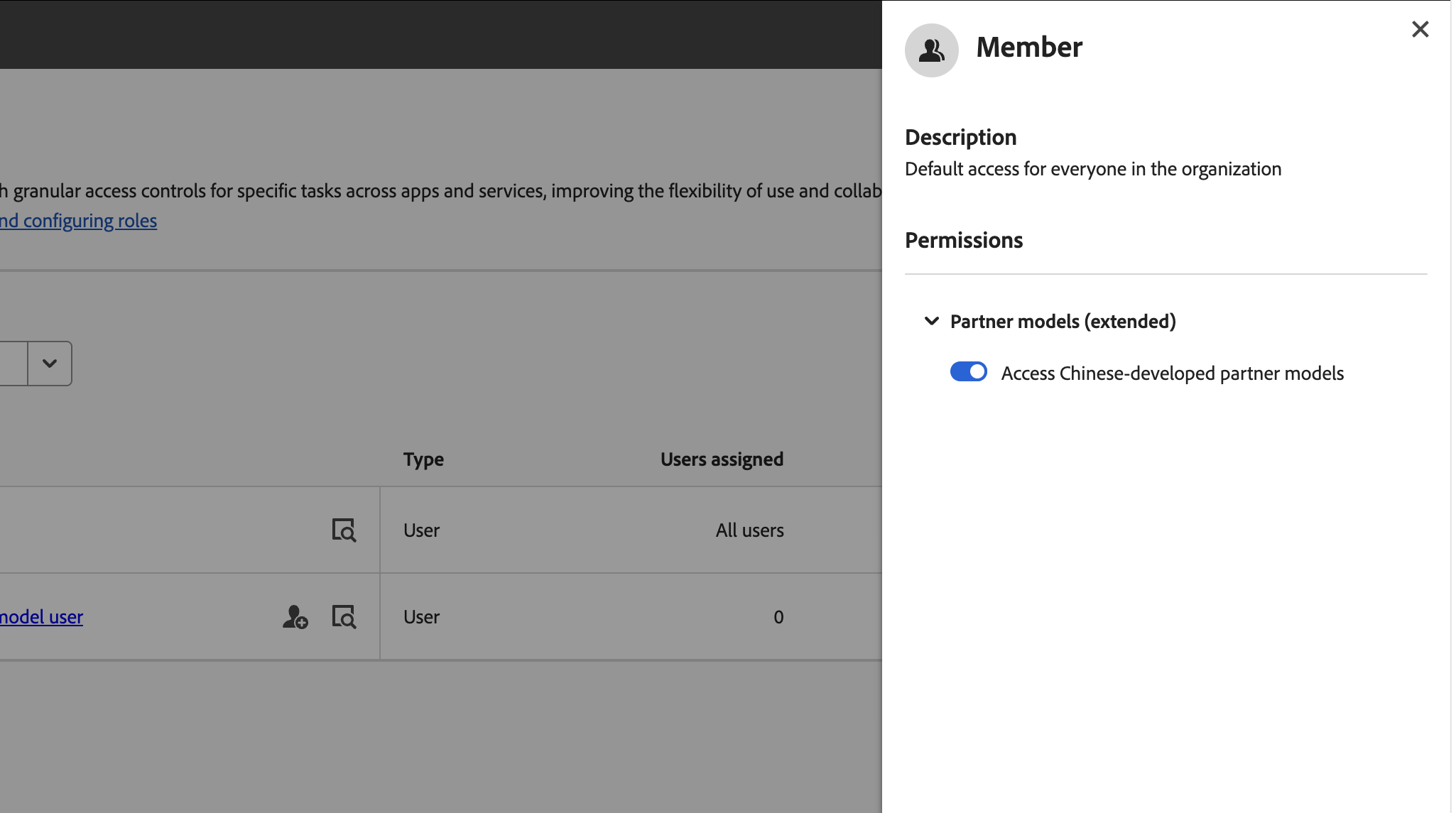
Adobe’s email to administrators said access to Chinese-developed partner models was on by default for users on the listed team and enterprise plans. It also said the models adhere to Adobe’s policies and customer content is never used to train Adobe or partner generative AI models. The public partner-model FAQ spells out the contract behind that promise: providers agree not to train on customer content.
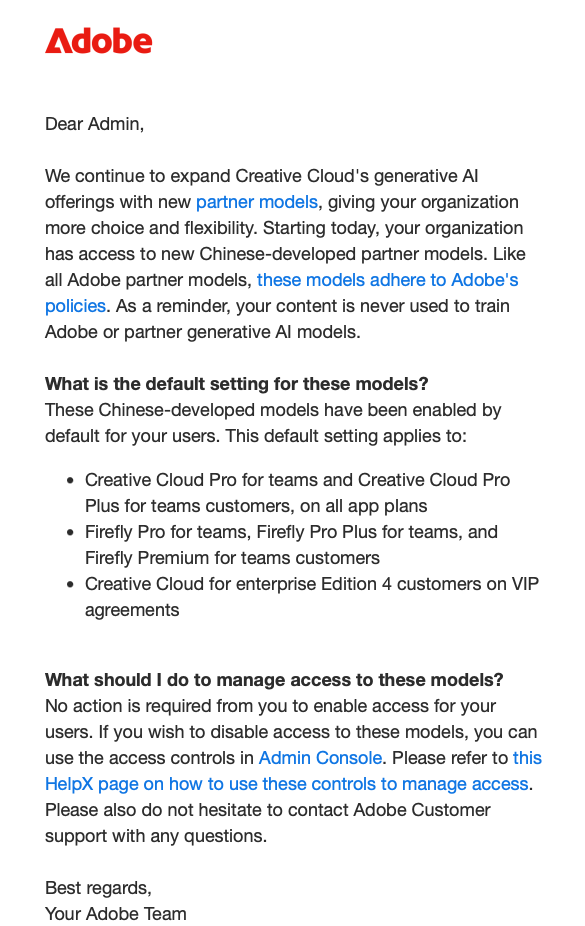
In my Admin Console, Access Chinese-developed partner models is on for the Member role, which is assigned to all users. Kling is available in this business account. Someone who missed Adobe’s email might never know the switch was on. A user must still select a model and generate something before a prompt goes to the partner; the role setting has already given them permission to do it.
Can you trust Kling with client work?
Yes, for client work your organization has approved for partner AI processing. Adobe’s vendor review policy requires procurement, security, and legal approval before a vendor can interact with Adobe data or products. The review covers access controls, logging, data-center security, vulnerabilities, encryption, breach procedures, and AI-specific risks. Adobe lists Kuaishou and Kling host fal.ai as subprocessors, requires them to meet its security standards, and says it takes contractual responsibility for them. Under Adobe’s partner FAQ, the partner receives only the prompt and reference files needed to generate a result, may use them only for that generation, and cannot train on customer content. Enterprise customers use their Adobe agreement; they do not need a separate Kuaishou account or contract.
Adobe’s partner-model security fact sheet follows a job from the Generate button to the finished clip. Adobe authenticates the user and checks permission. Data travels over TLS 1.2 or newer. Firefly, Content Credentials, and feedback data stored by Adobe use AES-256 encryption. Adobe’s Partner Gateway passes the request along without caching thumbnails or derivatives of uploaded reference images. The partner returns a clip through the gateway, Adobe attaches Content Credentials identifying the model, and Firefly keeps the prompt, references, settings, and output in Creative Cloud Generation History.
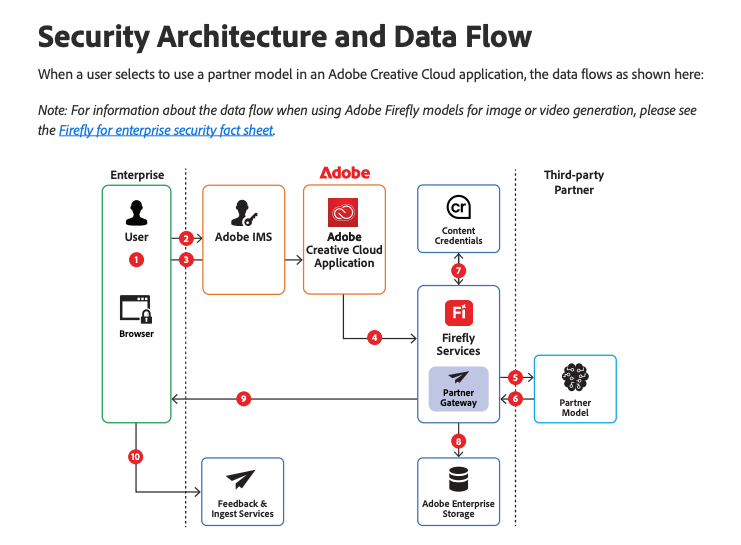
Look at the arrow in Adobe’s diagram: the request reaches the partner’s model. Adobe’s subprocessor list names Singapore as Kuaishou Technology’s primary processing location, Singapore, the United States, and Malaysia for Kling host fal.ai, and the United States for Runway. China is not listed for either Kling subprocessor. Adobe calls these headquarters and key processing hubs, so the list cannot tell you where any one clip was generated. Account and payment information do not go to the model provider. Adobe says a partner may store input or output elsewhere, and the public fact sheet gives no fixed retention period for that partner copy.
China is a country of concern under the Justice Department’s Data Security Program, which restricts certain transfers of bulk sensitive U.S. personal and government-related data. Adobe says its contracts and technical safeguards address the rule, and its published subprocessor list does not place Kling processing in China. For federal work, Creative Cloud for Enterprise has FedRAMP Low certification, but the public listing does not show Kling or Runway inside that authorization boundary. A team handling restricted federal material needs an authorization covering the partner-model workflow, not just Creative Cloud. The fact sheet also says partners conduct their own harm and bias testing and Adobe does not validate their attestations.
Adobe’s Kling page leaves commercial-project suitability to the creator. Its enterprise IP-protection page names Adobe Firefly, Google, and OpenAI outputs as potentially eligible for indemnification; it does not name Kling or Runway. You can use Kling in this business account, but you cannot assume every Adobe IP protection extends to its footage. Adobe reviewed the vendors, wrote the no-training restriction into its partner contracts, documented the path files take, and gave administrators a switch for access. In this account, that switch was already on for every member.
Sources
- Runway: House of David production story
- Runway: Life After People production story
- Kuaishou: Kling 3.0 launch and creator figures
- Kuaishou: New World Is Loading
- Artificial Analysis: 2025 year-end video model report
- Runway: Lionsgate partnership
- Runway: Gen-4.5 guide
- Runway: Grizzlies, made by Felipe Orozco with Gen-4.5 and Nano Banana Pro
- AI Talk: Consistency, made with Kling 3.0
- Luma: Ray3 and Adobe partnership
- Adobe and Runway partnership
- Adobe: Kling in Firefly
- Adobe: Partner models, availability, and Chinese-developed model disclosure
- Adobe: Partner-model security fact sheet
- Adobe: Generative AI approach
- Adobe: AI-model subprocessors and primary processing locations
- Adobe: Vendor Security Review Program
- Adobe: Creative Cloud enterprise AI governance and IP protection
- FedRAMP: Adobe Creative Cloud for Enterprise certification
- U.S. Department of Justice: Data Security Program
- Evan Halleck interview on Everything Everywhere All at Once
Related Posts

How I Hand Codex's Test Runs to Local Qwen
How I hand Codex's validation work to local Qwen, bound its test choices, and wake the same Codex chat with evidence.


I Tried Apple Photos MCP on 100 Unfiled Photos
I tried Apple Photos MCP on 100 pictures missing from my albums. Here's how I installed it, where Codex got stuck, and what it actually filed.
Bromure Gives Codex a Room of Its Own
I installed Bromure Agentic Coding, watched it build the Linux VM, authenticated Codex, and followed a real Codex task through the workspace.

Claude Code Auto Mode Changes Approval Flow, Not the Safety Boundary
Claude Code Auto mode changes how approval decisions are handled. It does not expand the boundary of what the coding agent should be allowed to do.
Opening the Ollama Black Box: Understanding the Trust Boundary Behind Local AI
Installing Ollama is easy. Understanding the trust boundary behind a local AI service is what determines whether it belongs in an automation workflow.
When AI Agents Trust the Wrong Tool Description
Microsoft's MCP tool-poisoning research shows why AI agent security has to treat tool descriptions, schemas, and metadata as part of the control plane instead of harmless documentation.
When a Local AI Tool Belongs in My Workflow and When It Stays in the Lab
Running AI locally on a Mac has become a real part of my workflow, but only once I stopped treating local models like general-purpose answers and started treating them like constrained components inside a system I can still inspect.

Scoring AI Influence in Jekyll Posts with Local LLMs
There’s a moment that kind of sneaks up on you when you’ve been writing for a while, especially if you’ve started using AI tools regularly. You stop asking whether AI was used at all, and instead start wondering how much it actually shaped what you’re reading. That shift is subtle, but once you notice it, you can’t really unsee it.
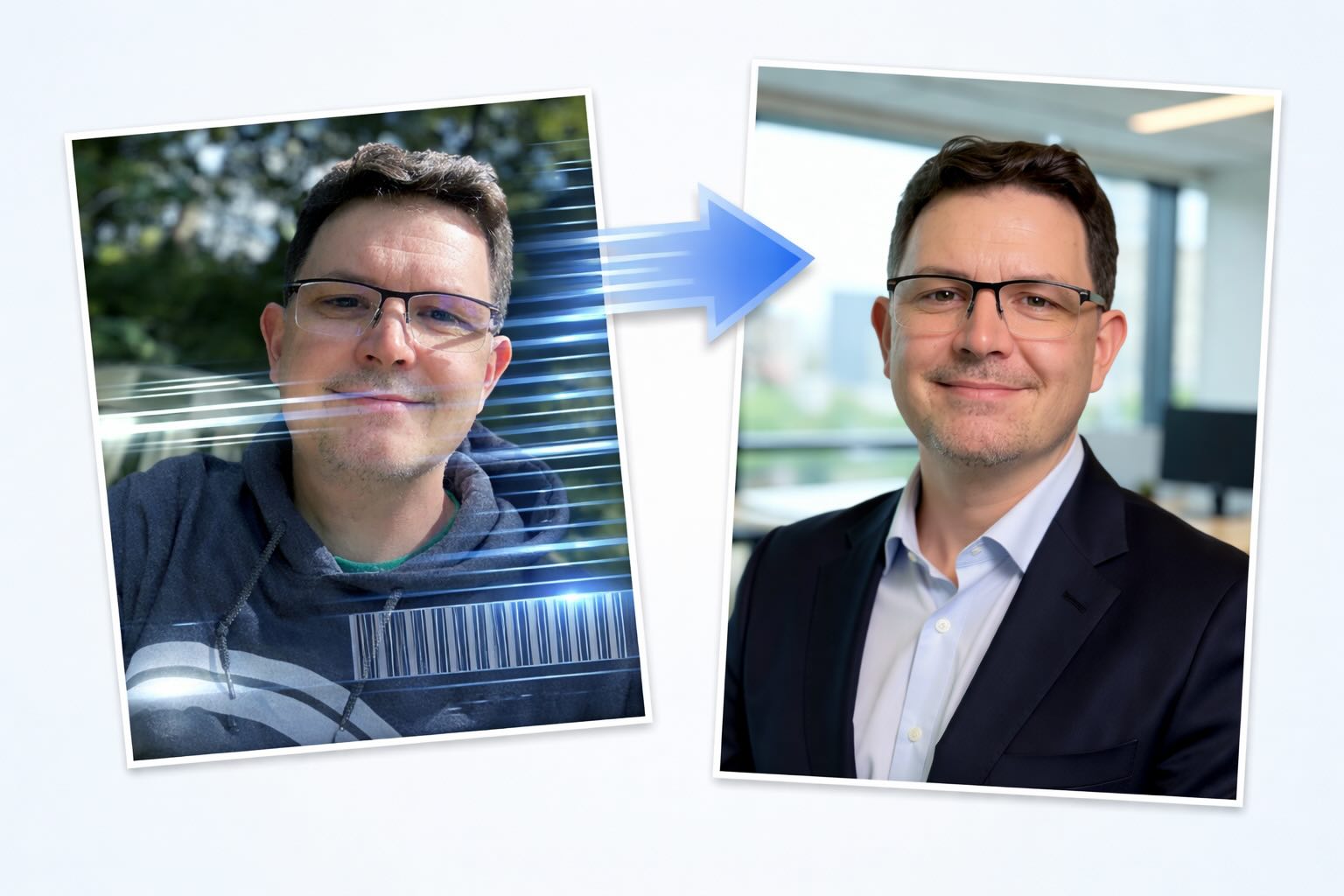
Running Image Generation Locally on macOS with Draw Things (2026)
Local LLMs have rapidly evolved beyond text and are now capable of producing high-quality images directly on-device. For users running Apple Silicon machines—especially M-series Mac Studios and MacBook Pros—this represents a major shift in what’s possible without relying on cloud services. Just a few years ago, image generation required powerful remote GPUs, subscriptions, and long processing times. Today, thanks to optimized models and Apple’s Metal acceleration, you can generate and edit images locally with impressive speed and quality. The result is a workflow that is faster, private, and entirely under...
