The CMMC Pause Does Not Make a Level 2 Audit Worthless


The CMMC Phase II suspension is not a small scheduling update for the defense industrial base. It is a hard pivot in the middle of an already expensive compliance push.
For years, contractors were told to prepare for CMMC. Companies built enclaves, hired consultants, wrote policies, tightened technical controls, collected evidence, trained staff, paid assessors, and in some cases completed Level 2 assessments before the next enforcement phase arrived. That work was not theoretical. It consumed real budgets and real operating time because the market was preparing for third-party certification to become part of contract eligibility.
Then, on July 13, 2026, the government paused the next gate. The November 10, 2026 move into Phase II is suspended, and contracting teams are being told not to require CMMC Level 2 third-party C3PAO assessments or Level 3 government-led DIBCAC assessments during the suspension. The stated reason is not that cybersecurity stopped mattering. The Department says the review is about reducing cost, lowering barriers for small, medium, and non-traditional businesses, and replacing bureaucratic compliance with security measures it considers more scalable.
That creates an uncomfortable business question for any company that already paid for Level 2: what now?
If competitors can avoid the audit cost for the moment, did the companies that went first waste money? Did they buy a certification advantage that just disappeared? How do you justify the push, the cost, and the disruption when the government changes the requirement after the work is already done?
The honest answer is not simple. The pause does change the market. It absolutely reduces the immediate contractual advantage of having a completed third-party assessment. A company that waited may feel validated in the short term.
But that is not the whole picture. The government did not say DFARS went away. It did not say NIST SP 800-171 no longer matters. It did not say SPRS self-assessment and affirmation are meaningless. It did not say contractors can stop protecting CUI. What changed is the near-term certification gate. What remains is the requirement to be able to defend the security claim.
That is where a completed Level 2 audit still has value. It may no longer be the immediate ticket into every Phase II contract requirement, but it is still evidence that the organization did the hard work: scoped the environment, tested the controls, aligned documentation to reality, collected artifacts, and proved the security program could survive outside review.
What actually changed
The Department’s CMMC page now says that Phase II requirements, originally scheduled for November 10, 2026, are suspended while Phase I self-assessment requirements remain in place. The Department also announced a review of the program and linked to a public RFI for industry feedback.
The implementation memo is more useful than the headline. In the Implementing Suspension of CMMC Phase II memo, the Department says that during the suspension, program managers and requiring activities may only include CMMC Level 1 Self or CMMC Level 2 Self assessment requirements. They may not designate Level 2 C3PAO or Level 3 DIBCAC assessment requirements during the suspension.
The same memo also directs active solicitations to be amended when the original requirements package included Level 2 C3PAO or Level 3 DIBCAC requirements. For existing contracts or agreements, contracting officers and agreements officers are directed to remove those requirements by modification before the next option period or during the next scheduled administrative modification.
That is a real change. It affects timing, procurement language, and the short-term demand for formal third-party certification.
It is not a cancellation of the cybersecurity baseline. The same implementation memo says baseline compliance with NIST SP 800-171 Rev. 2 will be enforced through Level 1 and Level 2 self-assessments and select government-led assessments. It also says the cybersecurity requirements in DFARS 252.204-7012, Safeguarding Covered Defense Information and Cyber Incident Reporting, remain in effect.
Why it happened and whether it comes back
The official explanation is burden.
In the July 13 announcement, the Department says CMMC was designed to improve DIB cybersecurity but had created prohibitive compliance costs and bureaucratic burdens. It also says recent data, including reports from the Small Business Administration, showed that CMMC compliance was forcing innovative companies out of the Defense Industrial Base and delaying critical capabilities.
That is the policy argument behind the pause. The Department is saying the program, as scheduled, was creating too much friction for the supplier base. The stated goal is not to abandon cybersecurity. It is to realign the certification program around acquisition speed, supplier access, and cybersecurity measures the Department describes as scalable and resilient.
That distinction matters. If the message were “CMMC is unnecessary,” the conclusion would be very different. The actual message is closer to “the current implementation is too heavy, too expensive, and too likely to reduce competition.” That is why Phase II is suspended while Phase I self-assessment stays in place and NIST SP 800-171 remains the baseline for Level 2.
The reimplementation question is where contractors need to be careful. The Department has not said Phase II is permanently canceled. The implementation memo says further guidance will be issued at the conclusion of the CIO’s 60-day review. The public announcement says a CMMC Reform Task Force will conduct a top-to-bottom review, synthesize RFI feedback, and deliver a final report to the CIO within 60 days.
That means the responsible planning assumption is not permanent cancellation. It is that CMMC is under review and may come back differently.
Could Level 2 third-party assessments return? Yes. Could the timing change? Yes. Could the trigger for when a C3PAO assessment is required become narrower? Also yes. Could the Department keep more work in self-assessment while using targeted government-led reviews for higher-risk programs? That would fit the interim language, but the final shape depends on what the Department issues after the review.
This is why I would not dismantle a CMMC program after the pause. I would maintain the evidence, keep the controls operating, watch the RFI and follow-on guidance, and assume the next version will still care about whether the company can prove its cybersecurity claim. What I would not assume is that the November 2026 Phase II model returns unchanged.
The audit changed from a deadline item to an evidence asset
Before the suspension, a Level 2 C3PAO assessment was easy to explain as a gate. Certain contracts were going to require it. Passing the assessment meant getting through that gate. After the suspension, the explanation has to change. The better business case is evidence.
A real audit forces the company to do work that a casual self-assessment can avoid. The scope has to be defined. The System Security Plan has to say how the environment works. Policies have to match reality. Technical controls have to be implemented. Evidence has to be collected. Gaps have to be closed or documented correctly. Someone outside the company has to look at the package and challenge whether the implementation actually supports the claim.
That work does not vanish because the deadline moved. In fact, the pause makes that work more valuable in a different way. If Level 2 self-assessment becomes the temporary path, then the quality of the self-assessment matters more. A company that already went through a serious audit is in a very different position from a company trying to reconstruct its security story after the fact.
This is where I would be careful with the language internally. I would not tell leadership that a passed audit eliminates all legal risk. It does not. Environments change. Scopes change. Controls drift. Contracts still need to be read carefully.
What I would say is this: the audit gives the company a stronger basis for whatever it signs next.
The signature still matters
CMMC did not remove executive responsibility. It made that responsibility more structured.
Under 32 CFR 170.22, an affirming official is responsible for affirming continuing compliance after assessments and annually afterward, with affirmations entered electronically in SPRS. The rule says the affirmation attests that the organization has implemented and will maintain the applicable CMMC security requirements for the relevant assessment scope.
That is not a casual click. The Department of Justice’s Civil Cyber-Fraud Initiative is also still part of the risk landscape. DOJ described the initiative as using the False Claims Act to pursue cybersecurity-related fraud by government contractors and grant recipients, including knowingly misrepresenting cybersecurity practices or knowingly violating monitoring and reporting obligations.
The CMMC Phase II pause does not give contractors permission to exaggerate their security posture. If anything, it makes the evidence behind the self-assessment more important. That is where a completed audit helps. It does not act as a magic shield, but it gives the affirming official and the company a much better record to rely on. There is a difference between “we believe we meet the controls” and “we have a scoped assessment package, mapped evidence, reviewed controls, and a record of what was tested.”
That is the accountability value of the audit. It bought more than a compliance milestone. It bought a defensible evidence position.
Prime contractors may still care
The government may pause formal Phase II assessment designations in solicitations and contracts, but prime contractors still have supply-chain risk to manage. They still need subcontractors who can protect covered defense information, maintain the required controls, and support contract flow-down requirements.
That does not mean every prime will keep asking for the same thing. Some may align directly with the paused government requirement. Others may ask for a current SPRS score, a redacted assessment summary, a System Security Plan summary, a supplier security questionnaire, or evidence that the environment has already been through a serious review.
This is where a completed Level 2 audit can become a sales and risk-management asset.
If a prime asks, “Can you prove this environment is ready for CUI?” the strongest answer is not a generic statement about policy. The strongest answer is a controlled evidence package: the assessment scope, the SSP version, the CAGE codes or business units covered, the final assessment result if it can be shared, the current SPRS status, and a clear explanation of what evidence can be provided under NDA.
That proof will not matter in every deal. It will matter in the deals where the buyer has to choose between a supplier with a mature evidence package and a supplier that is still trying to assemble one.
What I would do with the audit now
The worst move after the suspension would be to treat the audit binder like a trophy and stop maintaining the program.
I would turn the audit into an operating baseline. The first step is preserving the evidence package in a controlled location. That includes the SSP, assessment scope, control evidence, policies, procedures, diagrams, asset inventories, vulnerability management records, training records, MFA proof, incident response documentation, and any assessment reports or closeout material the company is allowed to retain and share.
The second step is deciding what can be shared externally. A full evidence package may contain sensitive architecture, security, and customer information. The company should know in advance what a prime contractor can receive, what needs redaction, what requires an NDA, and who is authorized to send it.
The third step is keeping the evidence alive. If MFA changes, update the evidence. If logging moves to a new platform, update the SSP. If endpoints move into a new management tool, update the diagrams. If the company opens a new CUI enclave or retires one, update the scope. A passed audit is only useful if it still describes the environment.
The fourth step is making the next SPRS affirmation boring. That means the control owners need a recurring review rhythm. Not a performative compliance meeting, but a real check: what changed, what evidence changed, what risks opened, what POA&Ms were closed, what needs leadership attention.
That is the benefit of having done the hard work already. The company does not have to invent the program during the pause. It has to maintain the program it already built.
The RFI is worth answering if you have real data
The Department also opened a public feedback window through a Request for Information titled “Reforming CMMC and Reducing Compliance Burden for the Defense Industrial Base.” The CMMC page links to the RFI posting on SAM.gov, and public opportunity summaries list responses as due August 14, 2026.
If a company already completed Level 2 work, it has better feedback than a company speaking in hypotheticals.
It can explain which controls created real security improvement, which activities were mostly administrative burden, where the assessment process created cost without improving resilience, and which commercial tools or managed services actually helped. That is useful information, and it is exactly the kind of feedback the review process is asking for.
I would not use the RFI to complain generally about compliance. I would use it to submit concrete implementation data: hours spent, tooling costs, assessor costs, evidence pain points, control families that improved operations, control families that created confusion, and recommendations that would reduce cost without weakening CUI protection.
That is another way a completed audit still has value. It gives the company real data to bring into the reform process.
The accountability did not disappear
The easiest mistake to make right now is treating the Phase II pause as a reduction in accountability. It is not. The pause changes who is forced to validate the claim before contract award. It does not remove the claim. If a contractor says it meets the required cybersecurity baseline, that statement still has to be supportable. If an executive affirms compliance in SPRS, that affirmation still needs to be grounded in evidence. If a prime contractor asks for proof before trusting a subcontractor with CUI, the subcontractor still needs a credible answer.
That is the accountability shift. During a mandatory third-party assessment, the assessor becomes part of the validation path. During a self-assessment period, more of that burden sits directly with the contractor. The company is no longer just asking whether it can pass an external audit by a deadline. It is asking whether the statement it makes about its security program can survive scrutiny later.
That is why completed Level 2 work still matters. The value is not just the certificate or the timing of the rule. The value is the evidence trail behind the claim: the scope, SSP, control implementation, policy alignment, technical artifacts, assessment records, and operational proof that the environment was reviewed seriously.
The pause changes the timing of formal third-party certification requirements. It does not remove the need to protect covered defense information. It does not remove DFARS 252.204-7012. It does not remove NIST SP 800-171 from the current baseline. It does not make SPRS affirmation casual. It does not make a weak self-assessment safer.
Sources
- DoD CIO: Cybersecurity Maturity Model Certification
- Department announcement: CMMC Phase II requirements suspended
- Implementing Suspension of CMMC Phase II memo
- DFARS 252.204-7012: Safeguarding Covered Defense Information and Cyber Incident Reporting
- NIST SP 800-171 Revision 2
- 32 CFR 170.22: CMMC affirmation requirements
- 32 CFR 170.17: CMMC Level 2 certification assessment and affirmation requirements
- DOJ Civil Cyber-Fraud Initiative
- SAM.gov RFI: Reforming CMMC and Reducing Compliance Burden for the DIB
AI Usage Transparency Report
AI Era · Written during widespread use of AI tools
AI Signal Composition
Score: 0.11 · Low AI Influence
Summary
The CMMC Phase II suspension is a hard pivot in the middle of an already expensive compliance push. The government paused the next gate, citing cost and bureaucratic burdens as reasons. The pause does not cancel cybersecurity requirements, but rather changes the near-term certification gate. A completed Level 2 audit still has value as evidence that the organization did the hard work.
Related Posts
Bromure Gives Codex a Room of Its Own
I installed Bromure Agentic Coding, watched it build the Linux VM, authenticated Codex, and followed a real Codex task through the workspace.

Amnesia Stealer Shows the Next Stage of ClickFix on macOS
Amnesia Stealer shows how ClickFix-style social engineering is adapting on macOS, while a public malware sample gives defenders an opportunity to study the behavior behind the campaign.
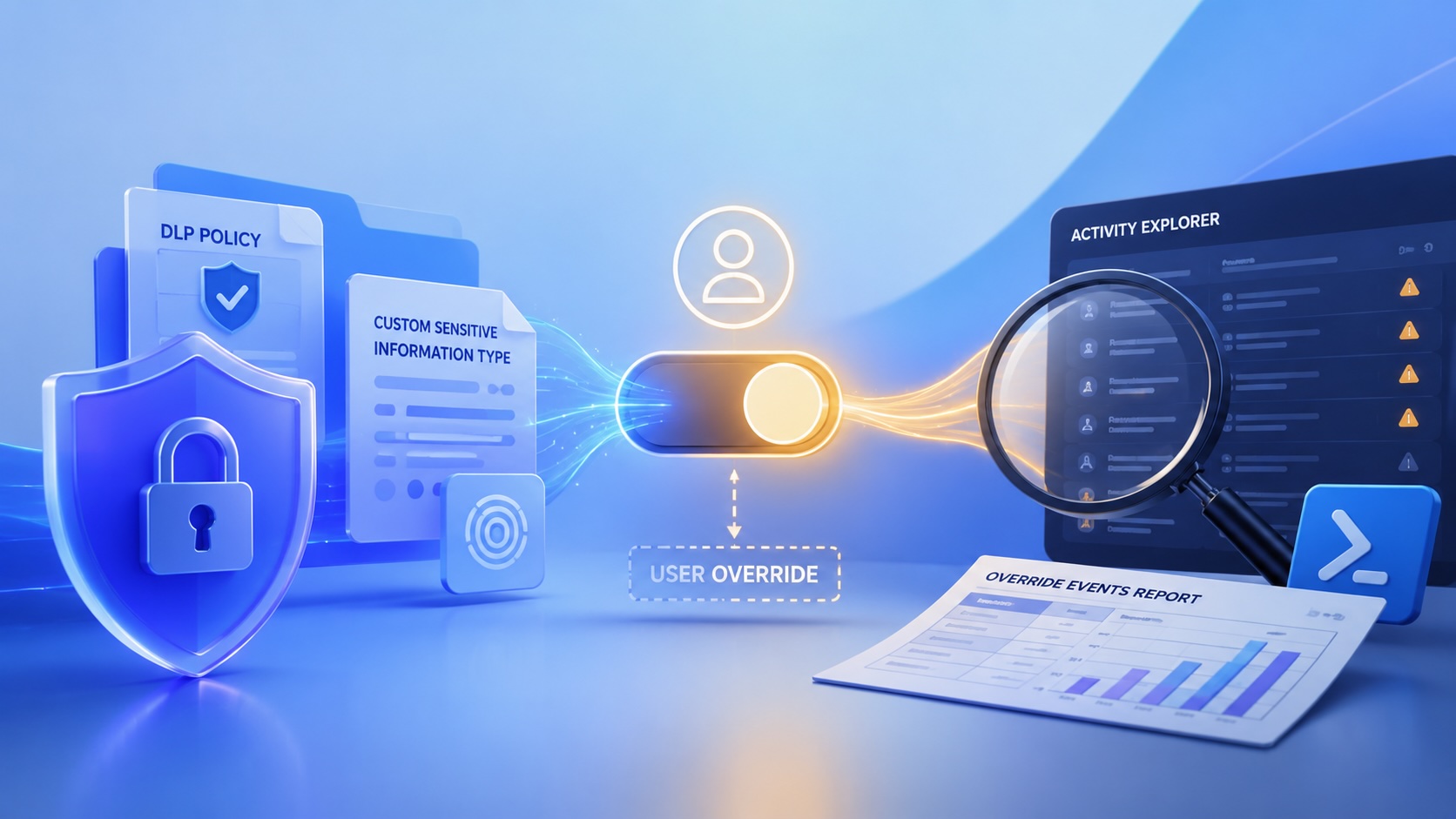
Reporting on Microsoft 365 DLP Overrides with PowerShell
DLP overrides are not automatically bad. They are a business process that needs visibility. This walkthrough covers a Microsoft Purview DLP policy, a custom sensitive information type, user override behavior, and a PowerShell report that exports override events from Activity Explorer.

Move Entra Users Off SMS and Voice Before Microsoft Retires Them
Microsoft is retiring Microsoft-provided SMS and voice authentication in Entra ID. The migration is not passkeys for everyone; it is removing weak telecom MFA and choosing supported replacement methods such as Microsoft Authenticator, FIDO2 keys, certificate-based authentication, OATH hardware tokens, or customer-managed telecom.

macOS Tahoe 26.6.1 Fixes a High-Severity Screen Sharing Authentication Bypass
macOS Tahoe 26.6.1 fixes CVE-2026-65400, a high-severity Screen Sharing authentication issue where an attacker on the network may be able to authenticate without valid credentials.
ClickLock Shows Why Terminal Paste Is a Mac Security Boundary
ClickLock Stealer shows why Mac security teams should watch for Terminal paste lures, fake AppleScript password prompts, command-line Keychain access, LaunchAgent persistence, and Jamf Protect alerts that can route suspected Macs into Jamf Pro response groups.

CrashStealer Shows the Gap Between Notarization and Detection
CrashStealer shows the security gap between Apple's Developer ID notarization path and App Store review, and why Jamf's behavioral detection mattered.
How We Structured and Hashed CMMC Evidence for Auditor Review
How folder naming, control-level artifact names, spreadsheet hyperlinks, and evidence hashing made a CMMC evidence package easier for the auditor to validate.

Opening the Ollama Black Box: Understanding the Trust Boundary Behind Local AI
Installing Ollama is easy. Understanding the trust boundary behind a local AI service is what determines whether it belongs in an automation workflow.

Your Vibe-Coded App Still Needs a Trustworthy Release Path
Why vibe-coded apps still need release discipline: code signing, notarization, checksums, and GitHub artifact attestations all support integrity and user trust.