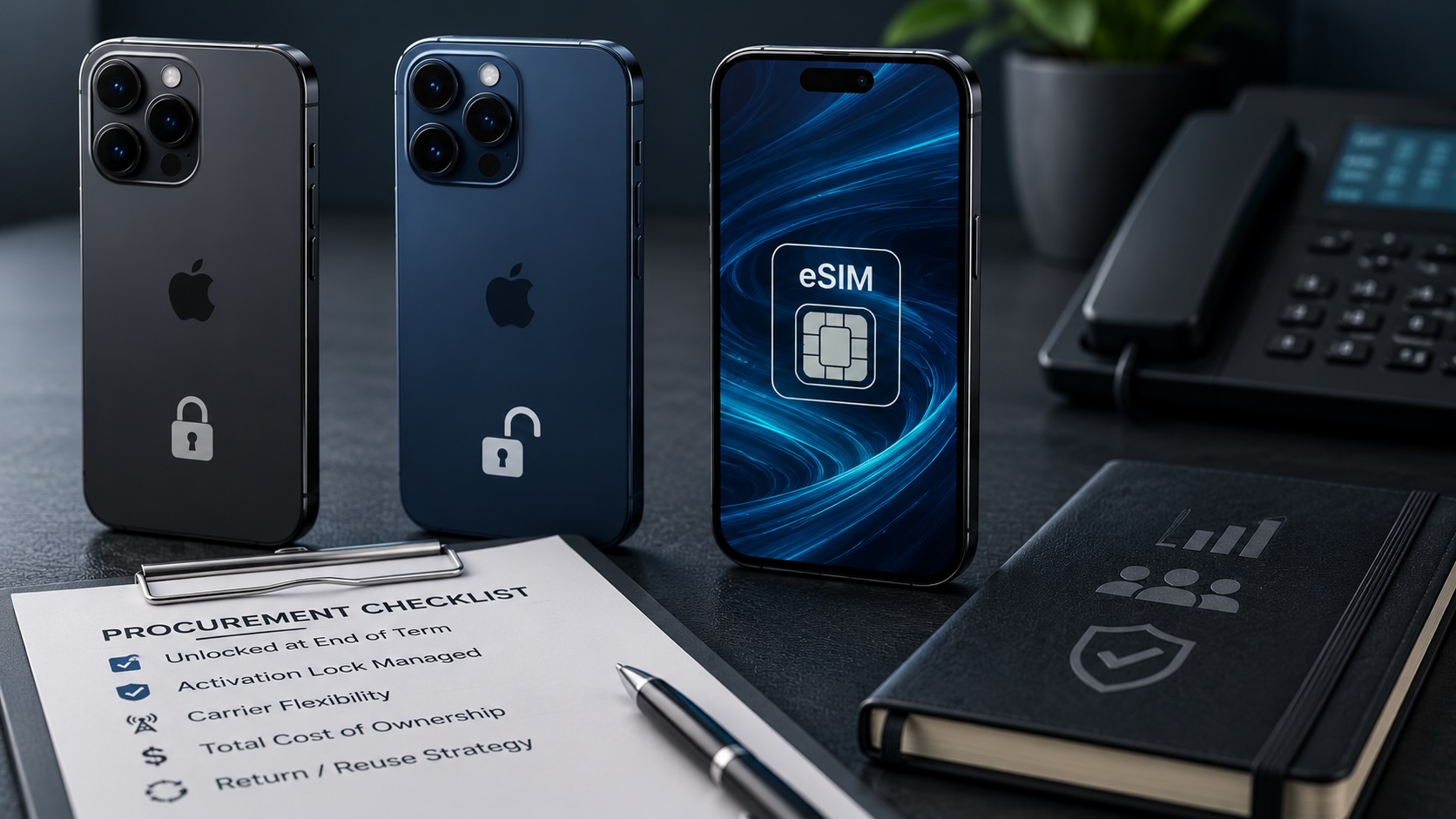

Apple’s iPhone financing change looks small if you only read it as a checkout detail. For a business buyer, it changes the operating model.
MacRumors reported on July 17, 2026 that Apple closed a U.S. loophole that let buyers finance an iPhone through T-Mobile or Verizon at Apple while still receiving an unlocked phone. The same site had noted two days earlier that carrier-financed iPhones through T-Mobile and Verizon were being added to the locked-device exception. AT&T-financed iPhones were already treated that way.
Apple’s own buying page now says that an iPhone bought from Apple is unlocked except for some carrier financing options, and Apple’s shopping help explains the practical difference: an unlocked iPhone can be used with supported carriers, while carrier activation and financing choices can add conditions. In plain terms, the change is this: if a U.S. buyer chooses an AT&T Installment Plan, T-Mobile Equipment Installment Plan, or Verizon Device Payment Program at Apple, the phone can be locked to that carrier until it is paid in full.
That matters because a lock is not just a label on the receipt. It is a constraint on activation, repair replacement planning, travel, BYOD flexibility, and the ability to move a phone when the business decision changes.
Locked is not the same thing as managed
The first distinction I would make is between a carrier lock and device management. MDM answers questions like: who owns the device, which restrictions apply, what apps should be installed, whether Activation Lock is managed, and whether the device is supervised. A carrier lock answers a different question: which cellular networks the phone is allowed to activate against while the lock is in place.
Those two controls can exist on the same device, but they are not substitutes for each other. A supervised iPhone can still be carrier locked. An unlocked iPhone can still be managed. If a business confuses those two ideas during procurement, the pain shows up later when the device needs to change carriers, use a travel eSIM, move between employees, or be resold. Apple’s iPhone buying page still presents the unlocked iPhone as the flexible path, but the exception now matters more. Financing through the carrier is no longer just a payment mechanism. It can become part of the deployment constraint.
What the lock changes operationally
The obvious consumer issue is that a locked phone cannot freely switch to another carrier. The business issue is broader.
If a small business buys phones through a carrier promotion, the monthly cost may look better than buying unlocked hardware outright. That deal may also come with bill credits, installment terms, required plans, trade-in conditions, and unlock rules. The device might be cheap only if the company stays inside that carrier relationship long enough for the credits to pay out.
That can be fine. A locked phone is not automatically a bad purchase. The problem is buying it without understanding the operational cost.
If the user travels internationally, a locked iPhone can prevent the simple path of adding a local eSIM. If the company wants to move from one carrier to another after a coverage problem, the phone may not move until the installment balance is resolved and the carrier unlock process is completed. If a break/fix replacement happens during a deployment, the replacement workflow needs to preserve both management state and carrier usability. If a BYOD user bought through a carrier plan and later needs to use the phone with a company-preferred line, the phone may not be ready for that use.
There is also a resale and redeployment angle. An unlocked device is easier to move between users, carriers, and future owners. A locked or not-yet-unlockable device carries more administrative baggage.
The carrier policies are not identical
This is where the checkout headline is not enough.
AT&T’s device unlock page says an AT&T device generally needs to be paid in full, not reported lost or stolen, tied to an account in good standing, and purchased more than 60 days ago before it can be unlocked. AT&T also notes a business-owned contract device can be unlocked once the service commitment term has ended. That is a very different planning model from simply assuming “Apple sold it, so it is unlocked.”
T-Mobile’s SIM unlock policy says postpaid devices need to be active on the T-Mobile network for at least 40 days on the requesting line, paid in full if financed or leased, not reported lost or stolen, and tied to an account in good standing.
Verizon’s device unlocking policy is different again: postpaid devices purchased from Verizon are locked for 60 days after purchase, and Verizon says it automatically removes the lock after that period unless the device is deemed stolen or fraudulently purchased.
Those details matter because a business buying phones should not treat “locked until paid off” as one universal carrier behavior. The financing term, unlock timing, unlock request process, account status, and exception handling all need to be checked before the purchase.
This is a U.S. buying decision
This change belongs in a U.S. procurement conversation because the affected buying paths are U.S. carrier financing options through Apple. The practical question is not whether every iPhone buyer in every country should care about carrier locks. The question is whether a U.S. business should trade unlock flexibility for carrier financing terms, bill credits, or a lower monthly device cost.
That is a real tradeoff. A carrier-financed phone may make sense for a business that is already committed to one carrier, does not expect to move lines, and understands when the phone can be unlocked. It is a weaker fit for teams that travel internationally, mix carriers by region, support BYOD reimbursement, redeploy phones frequently, or want clean resale and replacement options.
The important part is to make the lock status visible before purchase. If the device will be locked, the buyer should know the unlock conditions, the expected payoff timeline, and the cost of changing plans early. Without that, the financing choice can quietly become a mobility constraint.
Apple Card Monthly Installments and buying outright are different decisions
The cleanest path remains simple: if a business needs maximum flexibility, buy unlocked.
MacRumors noted that iPhones purchased outright or with Apple Card Monthly Installments remain unlocked from purchase, while carrier-plan iPhones unlock after they are paid off. Apple says unlocked iPhones can be used with supported carriers, and Apple’s shopping help points buyers toward “connect to any carrier later” when they do not want to activate with a selected carrier during checkout.
For a business, that creates three different buying models:
- Buy unlocked outright for maximum carrier and resale flexibility.
- Use Apple financing that does not attach the phone to a carrier lock, where available and appropriate.
- Use carrier financing only when the carrier commitment, unlock policy, plan requirement, and deployment model are acceptable.
The third option may still make sense. It just needs to be treated as a procurement decision, not a checkout shortcut.
Apple Financial Services is a hardware lease, not a carrier plan
The small-business version of this question is Apple Financial Services. A lot of smaller companies work with Apple directly, lease hardware through Apple Financial Services, and refresh on a predictable cycle instead of buying every iPhone outright.
That is a different buying model from carrier financing.
Apple’s small and medium-size business financing page describes lease-style options for Apple products, including iPhone. The comparison is built around lifecycle terms: Plan to Upgrade, where the business can return, refresh, or purchase equipment at fair market value, and Plan to Own, where the business can pay $1 to own the equipment or sell it back to Apple Financial Services at a guaranteed price. Apple’s broader Apple Financial Services page uses the same lifecycle framing: deploy, manage, upgrade, return, and refresh devices with predictable payments.
Carrier financing is framed differently on Apple’s Financing and Credit page. Apple describes carrier financing as splitting the iPhone cost over 24 or 36 months on the regular carrier bill. That is the model that creates the lock issue in this article: the wireless carrier is financing the phone and can tie the device to its network until its unlock conditions are met.
Apple Financial Services does not read that way in the public documentation. It finances the equipment lifecycle. It does not describe managing the cellular plan, billing the phone through AT&T, T-Mobile, or Verizon, or making the carrier the financing party. That distinction matters because Apple’s iPhone buying page says iPhones bought from Apple are unlocked except for a few carrier financing options. Apple’s unlock support page also makes the authority clear: Apple cannot unlock an iPhone for another carrier; only the current carrier can do that.
So the question I would ask Apple is very specific:
- Is this iPhone being leased through Apple Financial Services as hardware, with no carrier installment plan attached?
- Is any carrier activation, carrier promotion, or carrier installment agreement part of the order?
- At delivery, does Settings > General > About > Carrier Lock show
No SIM restrictions?
If the answer is that Apple Financial Services is only financing the hardware and there is no carrier installment plan attached, Apple’s public unlock language points toward the normal unlocked Apple purchase path. If a carrier activation, carrier discount, or carrier installment agreement is bundled into the transaction, then it needs to be treated like a carrier-linked purchase until Apple or the carrier confirms otherwise.
That makes Apple Financial Services potentially attractive for small businesses. It can preserve the procurement advantages of working directly with Apple while keeping the cellular plan decision separate. A business can lease the iPhone fleet, enroll devices through Apple Business Manager, assign them to MDM, choose carriers by coverage or cost, and refresh hardware later without making the wireless bill the hardware-financing system.
It still has tradeoffs. A lease is not the same as owning unlocked devices outright. The business needs to understand the term, payment frequency, end-of-term process, return condition, buyout option, and accounting treatment. Someone also needs to manage the operational details at refresh time: which devices are being returned, whether Activation Lock is cleared, whether MDM has been removed correctly, whether data erasure has been completed, and whether replacement devices arrive before old devices leave.
The useful distinction is simple: carrier financing optimizes the phone around the wireless bill; Apple Financial Services optimizes the phone around the business device lifecycle. The lock question depends on whether the order includes carrier financing or only hardware financing.
The practical takeaway
The useful way to think about this change is not “Apple made iPhones worse.” It is that financing is now part of the flexibility decision.
For a business, the best iPhone purchase path is the one that preserves options after the first activation. The device should be usable on the carrier that makes sense today, but it should also be easy to move to another carrier later, reuse with another employee, travel with a different eSIM, return at lease end, or resell without avoidable cleanup problems.
That means the carrier lock question belongs next to the lease and lifecycle questions. At the end of a carrier installment plan or Apple Financial Services lease, the business should know whether the iPhone is unlocked, whether it can be activated on another supported network, whether Activation Lock is under organizational control, whether MDM can be removed cleanly when appropriate, and whether the device can be returned, reassigned, or resold without depending on one user’s Apple Account or one carrier’s unlock process.
That is the real business takeaway: flexibility has to survive the financing model. A lower monthly payment is useful only if the business still controls the phone’s lifecycle when the term ends.
Sources
- MacRumors: Apple Just Closed an iPhone Loophole
- MacRumors: Apple Closes Unlocked iPhone Loophole for T-Mobile and Verizon Financing
- Apple: Buy iPhone
- Apple Shopping Help: iPhone
- Apple: Financing and Credit
- Apple: Small and Medium-Size Business Financing
- Apple Financial Services
- Apple Support: How to unlock your iPhone for use with a different carrier
- AT&T: Unlock an AT&T Device
- T-Mobile: SIM Unlock Policy
- Verizon: Device Unlocking Policies
- TechRadar: iPhone financing loophole coverage
AI Usage Transparency Report
AI Era · Written during widespread use of AI tools
AI Signal Composition
Score: 0.26 · Moderate AI Influence
Summary
The change in Apple's iPhone financing policy affects business buyers, as it can impact the operating model and flexibility of using the device with different carriers.
Related Posts

Clamshell iBook G3 Restoration, Part 1: From Broken Screen to Board-Level Repair
Part one of a Clamshell iBook G3 restoration: a broken screen, a charger detour, a blinking system folder, a full teardown, and the backlight connector mistake that paused the project.

PowerBook 140 BlueSCSI Install: Cable Fixed, Battery-Bay Power, and Wi-Fi Setup
The PowerBook 140 project moved from preparing a BlueSCSI card in Basilisk II to installing the repaired internal SCSI cable, powering the BlueSCSI Pico externally from the battery bay, booting System 7.1, and fighting through DaynaPORT Wi-Fi setup.
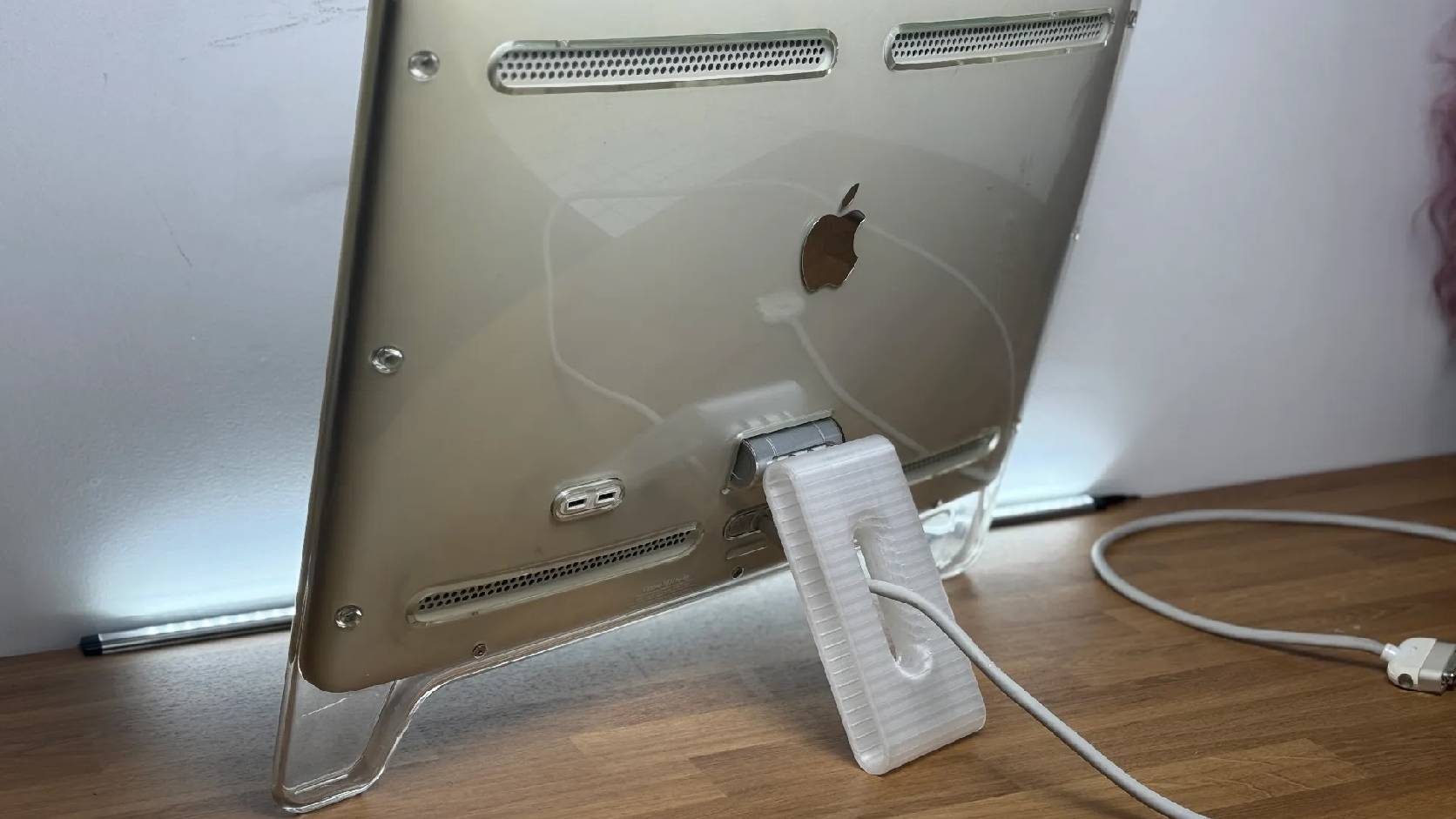
Fixing a Broken Apple Cinema Display Stand with a 3D Printed Leg
A 22-inch Apple Cinema Display arrived with a broken acrylic easel stand, so I used a 3D printed replacement leg instead of sending the monitor back.

macOS Tahoe 26.6.1 Fixes a High-Severity Screen Sharing Authentication Bypass
macOS Tahoe 26.6.1 fixes CVE-2026-65400, a high-severity Screen Sharing authentication issue where an attacker on the network may be able to authenticate without valid credentials.

ClaudeChat Makes Snow Leopard Feel Useful Again
ClaudeChat-Snow-Leopard is interesting because it brings a modern Claude API workflow back to Mac OS X 10.6.8 with Objective-C, Cocoa, Keychain storage, screenshot uploads, and a native installer built for an older white MacBook.
LibrePods Turns AirPods Into an Interoperability Question
LibrePods is interesting because it turns AirPods into an interoperability question: what happens when open-source software implements Apple's private AirPods protocol so Android and Linux users can reach features normally reserved for Apple's ecosystem?
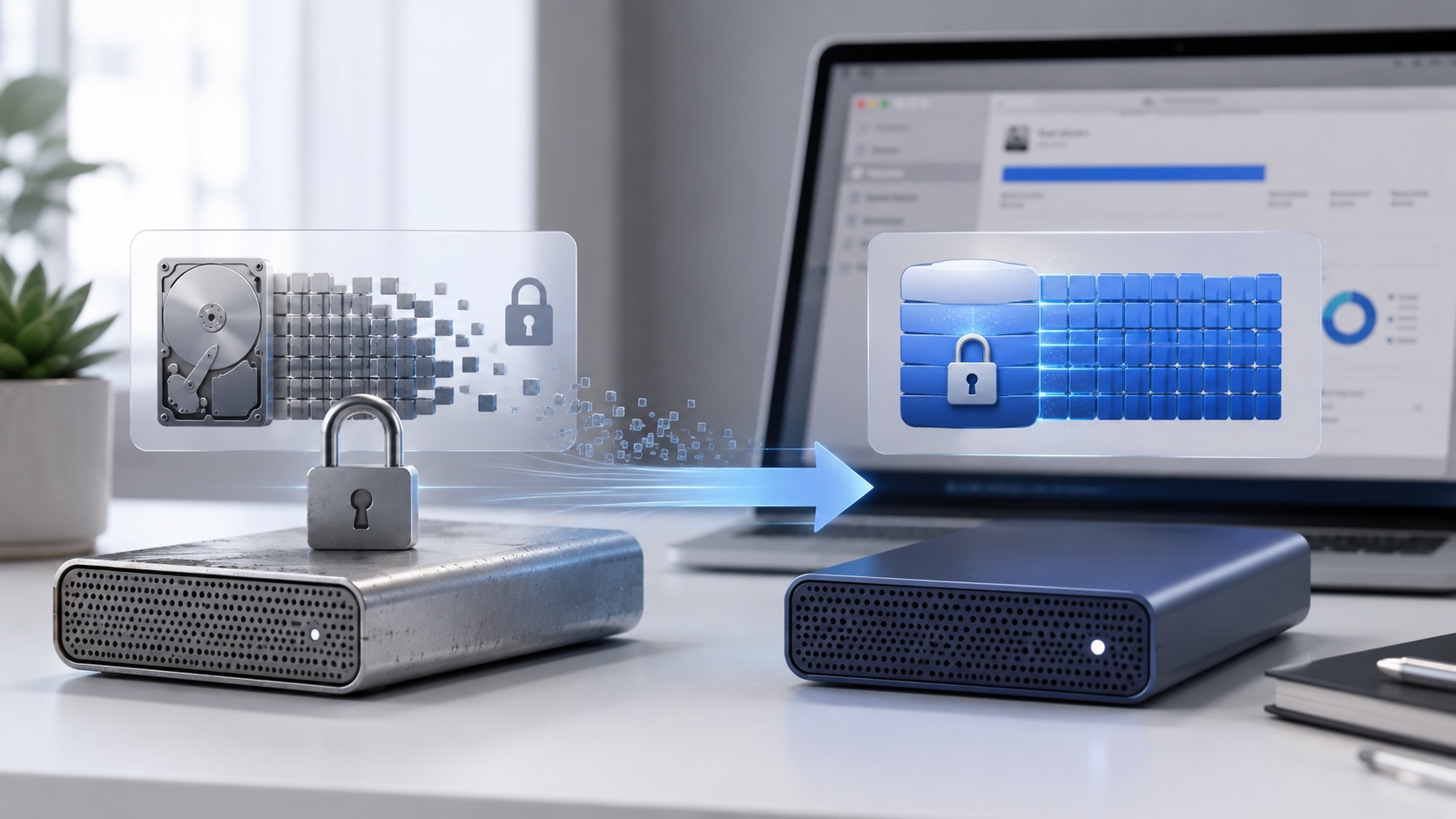
Check Encrypted HFS+ Drives Before macOS 28
Apple says macOS 28 will not support encrypted Mac OS Extended volumes, so older encrypted HFS+ external drives need to be identified, backed up, decrypted, converted, or reformatted before that upgrade.
AppleCare One Just Became a Better AppleCare Deal
AppleCare One looks more valuable after AppleCare+ price increases for Macs and iPads, especially for people with several Apple devices and older eligible hardware.
Preparing a BlueSCSI Card for My PowerBook 145 with Basilisk II
A step-by-step walkthrough for preparing a BlueSCSI v2 PowerBook card image with Basilisk II: download the pieces, configure the emulator, boot a working classic Mac image, mount the target System 7.1 image, stage tools, and shut down cleanly before moving the image to the card.
How a Floppy Disk Turned My PowerBook 145 Around
A replacement adapter finally brought my PowerBook 145 back to life, but the storage bay had a stranger problem than I first thought: the drive inside was an IDE drive, not the SCSI storage this machine needs. The surprise was that 6 MB of RAM made a System 7.1 RAM Disk boot possible while I wait on a replacement cable and BlueSCSI.